

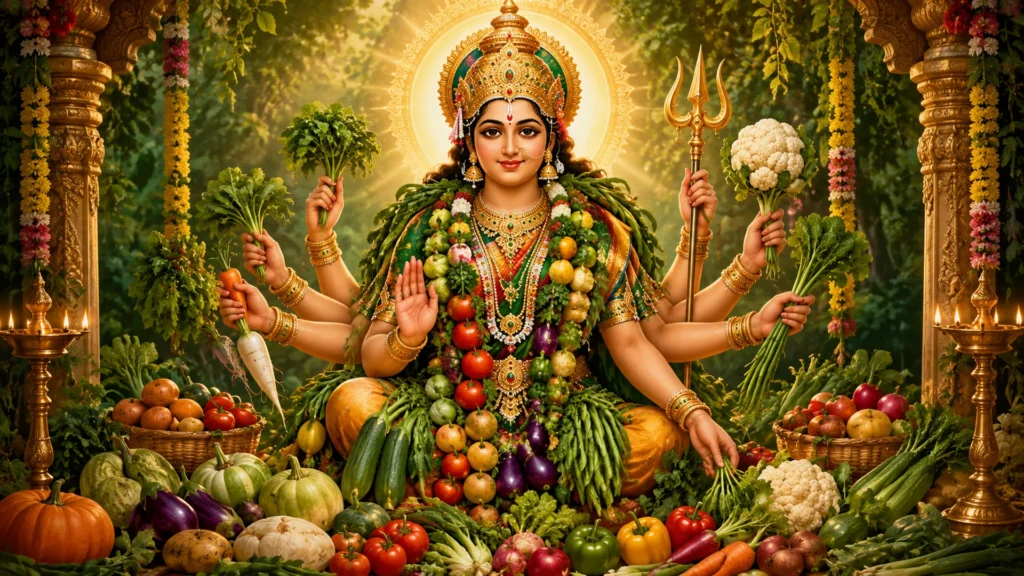
Om Am Sham Shakambhari Devi Sakala Sthaavara
Jangama Rakshaki Dhana Dhaanya Vrithi Kaarini Namah!
KINDLY NOTE:
This article pertains to a topic from another article released on www.dipika.org.za called “Shakambhari Devi (The Mother of Nourishments).”
This particular article is linked here for your convenience:
http://dipika.org.za/wp-content/uploads/2015/04/Shakambhari-Devi.pdf
The month of Aadi Madham is widely known as the Tamil month of Aadi (17th July – 16th August 2019).
During this month, many Hindus of South Indian descent prepare foods with ingredients such as pumpkin, herbs (generally drumstick leaves), mixed vegetables, etc., for the Mother (Mata/Ammen).
Ammen’s devotees know Her simply as Ammen/Marieammen, but one of Her other names is Mother Shakambhari Devi.
Mother Shakambhari is an incarnation of Devi Durga, the consort of Lord Shiva.
During times of famine, Mother Durga (in Her expansion as Mother Shakambhari) descended upon this earth and distributed vegan food to the hungry.
“Shaaka” is derived from the Sanskrit word meaning vegetables or vegan food, while “Ambari” is derived from another Sanskrit word meaning “one who wears or bears.”
In fact, the name Shakambhari comes from “shaka” joined with the root “bhri” (“shaka” meaning vegetables or food, and “bhri” meaning to nourish).
Mother Shakambhari is mentioned in the 11th Chapter of the Durga Path (verses 46–49), as well as in Chapter 28 of the Seventh Book of the Devi Bhagavatam Purana, titled “On the Glory of Shakambhari/Shatakshi Devi.”
The splendid form of Shakambhari Devi is described in detail in the 11th Chapter of the Durga Path (Saptashati).
According to the Durga Path, Mata’s complexion is blue.
Her eyes resemble lotus flowers.
Her navel is slightly below the normal position and has three graceful folds.
She bears the breasts of a virgin.
She carries a lotus flower in one hand, surrounded by bees.
Another hand carries arrows.
Her remaining hands hold flowers, roots and vegetables.
The fruit symbolises the Goddess of vegetation, who nourishes humanity and aids in the prevention of disease.
In another hand, She carries a bow, symbolising Her fierceness.
This is the appearance of Shakambhari Devi, also known as Shatakshi or Durga Devi.
This merciful Mother removes grief and calamities and destroys the demons.
A devotee who worships Her through hymns, meditation, japa and bhajans attains the blessings of food, drink and infinite bliss.
This particular question is frequently asked:
“Why are pumpkin curry, drumstick herbs (moringa leaves) and mixed vegetable curry always prepared and offered together with sour porridge to Amma during this month?”
It is an excellent question, and the answer lies in the picture below.
To gain a better understanding and context, kindly view the image below.
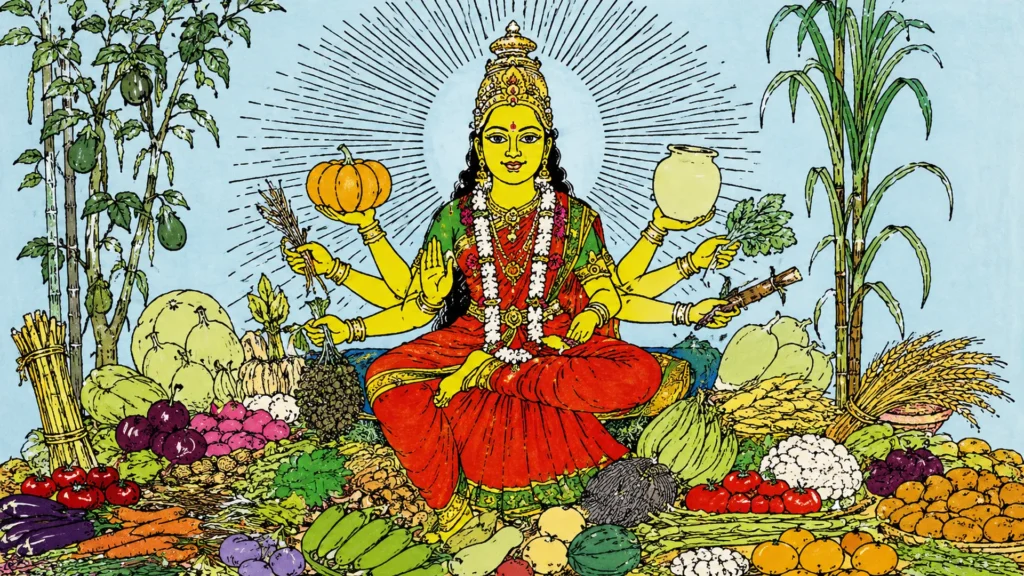
Notice the pumpkin in Amma’s uppermost right hand, a variety of herbs, spanspek in Her upper left hand, corn, pineapple, bananas, snake gourd (chichinda), grapes, lime, green bananas, carrots, butternut, squash, bindi, mangoes, tomatoes, potatoes, brinjal, roots and many other fruits and vegetables.
While many things found in nature possess one or two health benefits, Moringa possesses many.
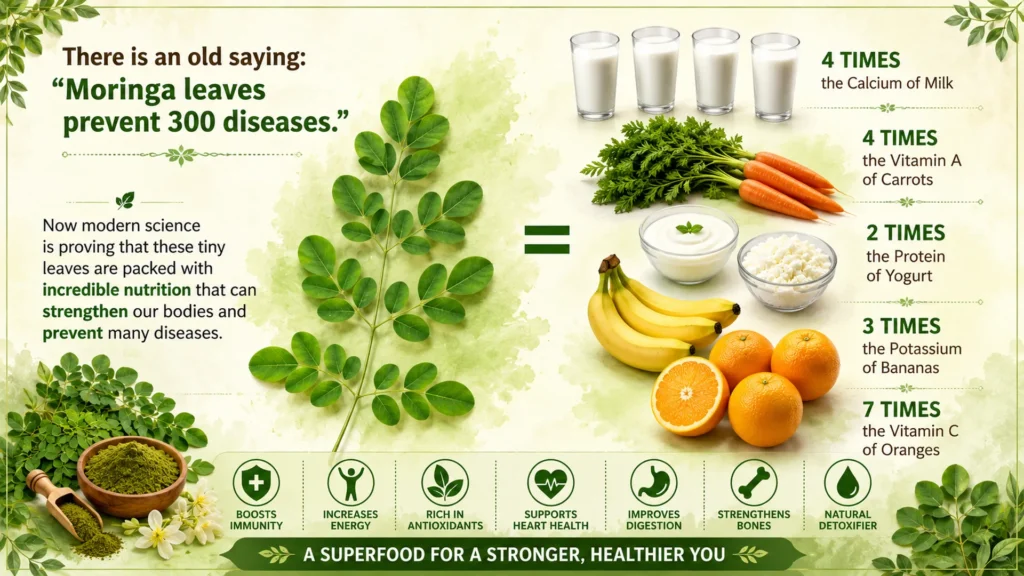
India’s ancient tradition of Ayurvedic medicine cites approximately 300 diseases that can be treated with the leaves of the Moringa tree.
Recent scientific research has shown that these humble leaves are indeed a powerhouse of nutritional value.
Drumstick herbs curry has been prepared as an offering to Amma since ancient times, and these are the reasons why.
For the benefit of those who may not know how to prepare these offerings, we are providing the method below.
In social media these days, the hot topic of discussion is Moringa herbs.
These Western marketers certainly know how to repackage a product and sell it for a fortune.
Kindly do not support such practices and be “ripped off.”
Rather, plant your own Moringa tree in your yard.
NB
- In the recipes provided below, garlic and onions are used as ingredients. However, some devotees do not use garlic or onions because they may argue that these ingredients are not Sattwic (mode of goodness), and this is true.
Garlic is considered a food in the mode of ignorance, while onions are considered foods in the mode of passion, according to Ayurvedic texts.
Therefore, the decision to use these ingredients rests entirely with the individual.
If you believe they are unsuitable, then simply omit them from the recipe.
One must remember that everyone has a choice.
- When preparing any offerings to Amma—or to any Deity for that matter—it is strongly recommended that:
- One should first bathe and wear clean clothes.
- Talking should be avoided (one may cover the mouth with a cloth), as saliva from one’s mouth could accidentally enter the offerings, rendering them unsuitable for Amma.
- Shoes should not be worn (unless they are used exclusively in the kitchen).
- While preparing the offerings, one should mentally chant Amma’s mantras. Avoid chanting aloud, as saliva could accidentally contaminate the preparations.
- Mantras such as “Om Doom Durgaayai Namah” should be mentally recited throughout the preparation, as the vibrations generated during cooking influence the offerings that Amma will accept.
Kindly note that the following recipes lean towards a South Indian flavour, as this is the Tamil month of Aadi.
Do note: The abbreviations used below are:
- tbsp – tablespoon
- tsp – teaspoon
DRUMSTICK HERBS
Binomial name: Moringa oleifera
Sanskrit: Muragee
Hindi: Sehjan ki phali
Tamil: Murungakkai
Many parts of the Moringa tree are edible.
Traditional uses vary widely.
For example:
- The immature seed pods (“drumsticks”) are popular throughout Asia and Africa.
- The leaves are eaten.
- Oil is extracted from the mature seeds.
- The roots are edible.
- The flowers are edible.
Many experts have advocated Moringa as “natural nutrition for the tropics.”
The nutritional properties of Moringa are now so well known that there appears to be little doubt regarding the substantial health benefits gained from consuming Moringa leaf powder, especially in situations where starvation is imminent.
Comments such as these have made Moringa increasingly popular.
Always choose fresh leaves that do not appear wilted or old.
Check for signs of discolouration or yellowing.
Ensure there are no black spots on the leaves.
DRUMSTICK HERBS CURRY
Simple Drumstick Herbs Curry
Ingredients
- 2 cups drumstick (moringa) leaves, tightly packed
- 3–4 tbsp ghee
- ½ onion, sliced
- 3–4 cloves garlic, finely chopped
- A pinch or two of hing (asafoetida) powder
- ¼ tsp turmeric powder
- 2–3 dried red chillies
- ¼ tsp sugar
- Salt, to taste
Method
Carefully separate the leaves from the stalks. It is always advisable to leave a small portion of the tender stalk attached to the leaves; however, avoid including the thicker stems.
Wash the leaves thoroughly, drain well and set aside.
Heat the ghee in a kadai (deep cooking pot).
Add the finely chopped garlic, sliced onion, hing and dried chillies, and allow them to braise gently for a short while.
Add the drained leaves.
After approximately 30 seconds, add the turmeric powder, salt and sugar.
Continue stirring for about one minute to distribute the salt evenly. The salt will draw out moisture from the leaves, which assists with the cooking process.
Cook over low heat for approximately five minutes.
As the leaves cook, their volume will reduce. The moisture released from the greens will gradually evaporate, allowing the leaves to cook properly.
Once the leaves are fully cooked, increase the heat to evaporate any remaining excess moisture.
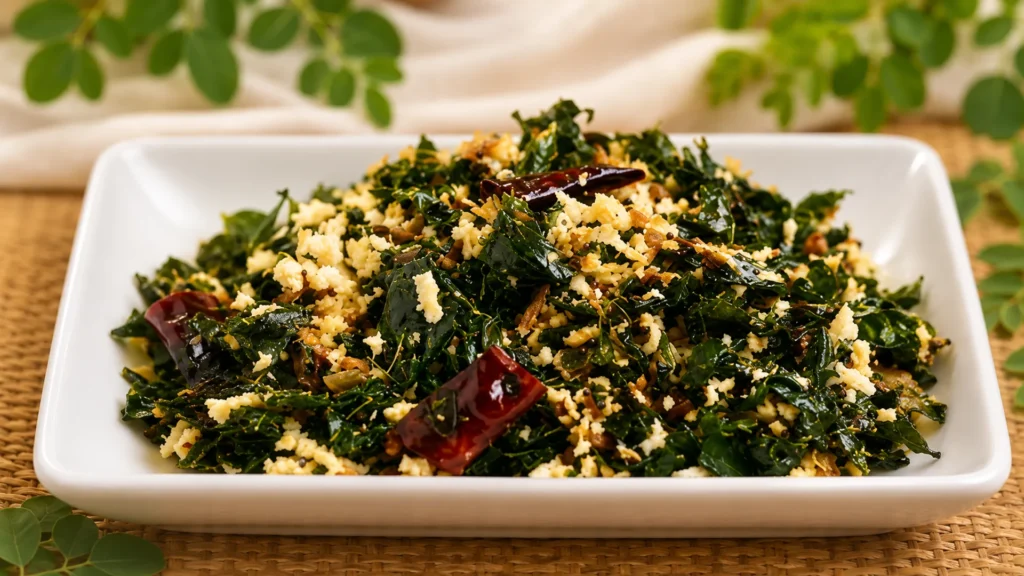
Note: You may add raw scrambled paneer to the herbs, as shown in the picture above. Add the scrambled paneer at the end of the cooking process and allow it to simmer gently.
Remember never to taste any offerings before they have first been offered to Amma.
Notes
- Curry leaves are generally not added to stir-fries or dishes containing leafy greens such as spinach, methi or moringa leaves.
- Adding a small amount of sugar helps retain the vibrant green colour of the leaves.
- I personally prefer treacle sugar rather than brown or white sugar.
- Leaving too many stalks in the curry can make it difficult to digest.
OTHER METHODS OF USING DRUMSTICKS
Drumstick pods can be prepared as a curry.
The flowers may be boiled in water, allowing their healing properties to infuse into the water to make Moringa tea.
Likewise, the leaves may be boiled in water so that their beneficial properties infuse into the water, which is then consumed for health purposes.
Drumstick leaves are commonly used in:
- dals
- kormas (vegetables braised in a spiced sauce made with yoghurt, cream or a nut/seed paste)
- sambhar (a lentil-based vegetable stew prepared with tamarind)
Drumstick leaves are also frequently fried together with paneer.
Some people add the leaves to a variety of curries by combining them with coconut, poppy seeds and mustard seeds.
Tender drumstick leaves, finely chopped, make an excellent garnish for vegetable dishes, dals, sambhar and salads.
Dried or powdered Moringa leaves, when incorporated into one’s daily diet, can significantly improve nutritional intake.
Bread, muffins, pastries, rolls and cakes may also be prepared by combining Moringa oleifera powder with wheat, maize or rice flour.
The glories and benefits of the Moringa tree are truly vast.
STILL THINK OUR ANCESTORS WERE CRAZY WHEN THEY SO STRONGLY STRESSED THE IMPORTANCE OF DRUMSTICK HERBS?
Well, read more below…
Loved as “Mother’s Best Friend” in East Africa, and known throughout the world as the “Never Die Tree” and the “Miracle Tree,” Moringa is one of the most useful trees on earth.
Every part of the tree—including the leaves, stems, seeds, pods, fruit, roots and bark—possesses enormous medicinal value.
Moringa is recognised as one of the richest natural sources of antioxidants, containing approximately 46 antioxidants and 36 anti-inflammatory compounds, making it an exceptionally wholesome plant for humankind.
[IMAGE PLACEHOLDER – Infographic or image illustrating the nutritional and medicinal benefits of the Moringa tree.]
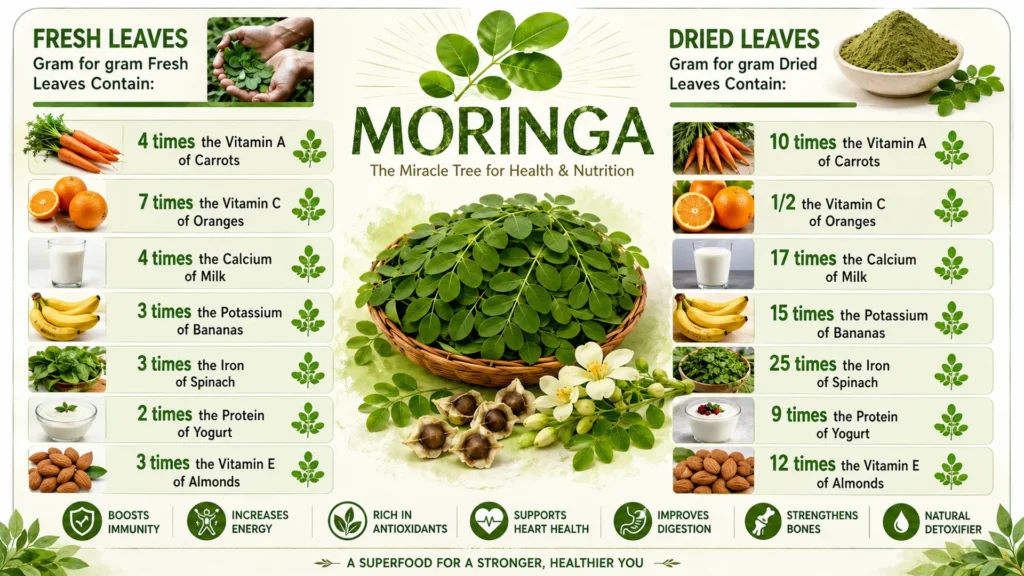
Ayurveda, the mother of all healing sciences, lists approximately 300 diseases that may be treated using this remarkable herb, known in Ayurvedic literature by names such as Shigru, Sahijna, Munaga, Shobanjana and Sainjna.
Scientifically, Moringa is classified as Moringa pterygosperma Gaertn. or Moringa oleifera Lam.
The name Moringa is derived from the Tamil word murunga.
The name pterygosperma refers to its winged seeds, while oleifera refers to the stable, non-drying oil produced from the seeds, which has an exceptionally long shelf life.
Moringa is a hardy plant capable of thriving in very dry climates, although it grows larger and faster when supplied with sufficient water.
With proper care and watering, a Moringa tree can grow as much as 16 feet in a single year.
It is, however, recommended that the tree be pruned regularly to keep it short and bushy, making it easier to harvest the leaves and pods.
[IMAGE PLACEHOLDER – Healthy Moringa tree with leaves and seed pods.]
Historical Importance of Moringa and Its Essential Oil
Commonly known throughout the world as the drumstick tree, clarifier tree and horseradish tree, Moringa is exceptionally nutritious and is regarded as one of India’s greatest botanical treasures.
Its graceful appearance enhances its surroundings with natural beauty and freshness.
This remarkable tree has enjoyed an exceptionally long history of traditional use.
Some of its most important historical uses are listed below.
Historical records reveal that Indian kings and queens regularly included drumsticks and their leaves in their daily diet to maintain excellent health, increase energy and relieve inflamed joints.
Young Moringa leaves were traditionally used in folk medicine to treat:
- the common cold
- dog bites
- scurvy
Fresh Moringa leaves were also rubbed on the temples to relieve severe headaches.
The leaves were further used in the treatment of:
- fever
- inflammation of the mucous membranes
- bronchitis
- colds
- ear infections
- eye infections
Historical Importance of Moringa and Its Essential Oil (Continued)
Tea prepared from Moringa leaves has traditionally been used to treat:
- diarrhoea
- gastric ulcers
- stomach pain
Moringa leaves and food products are regarded as an excellent source of nutrition for people suffering from malnutrition, as they are rich in fibre, protein, minerals, vitamins and carbohydrates.
In countries such as Senegal and India, Moringa has traditionally been used in the treatment of:
- sleeplessness
- anxiety
- asthma
- dysentery
- skin rashes
- sores
- colitis
It is also added to children’s food to help combat malnutrition.
The leaves and tender twigs are used as nutritious fodder for farm animals such as goats, sheep, camels and cattle.
The juice extracted from Moringa flowers has traditionally been used to treat:
- urinary problems
- the common cold
It has also been used to enhance both the flow and quality of breast milk in nursing mothers because of its tonic, diuretic and cholagogue properties.
Moringa flowers are regarded as an excellent source of pollen for honey bees.
The high iron content found in Moringa leaves has traditionally been used in the Philippines to help treat anaemia.
Moringa gum has also been used in the treatment of:
- asthma
- tooth decay
- rheumatism
Moringa oil has traditionally been used in the treatment of:
- syphilitic wounds
- scurvy
- hysteria
- bladder disorders
- prostate disorders
- fungal infections
- various skin complaints
Villagers in Oman traditionally use this oil as a perfume and for treating hair and digestive disorders.
People living in the Arabian deserts historically applied the oil to their faces to protect the skin from the harsh effects of the wind and sun.
Moringa oil was placed in Egyptian tombs, while the Romans used it as a base for perfumes.
Therapeutic Properties of Moringa Essential Oil
The principal therapeutic properties attributed to Moringa essential oil include:
- antibacterial
- anti-inflammatory
- diuretic
- antispasmodic
- anti-choleric
- antifungal
- antihypertensive
- anti-tumour
- anticancer
- anti-ulcer
- immune stimulant
- aphrodisiac
- antidiabetic
- tonic
- antipyretic
- hepatoprotective
- cholesterol-lowering
- antioxidant
A study entitled “Medicinal Properties of Moringa oleifera: An Overview of Promising Healer” analysed many of the reported therapeutic properties of Moringa oleifera.
Ayurvedic Health Benefits of Moringa Essential Oil
Ayurveda, the ancient science of healing dating back more than 5,000 years, originated in India.
This holistic system of healing has utilised one of the world’s most valuable trees—Moringa—for over 4,000 years.
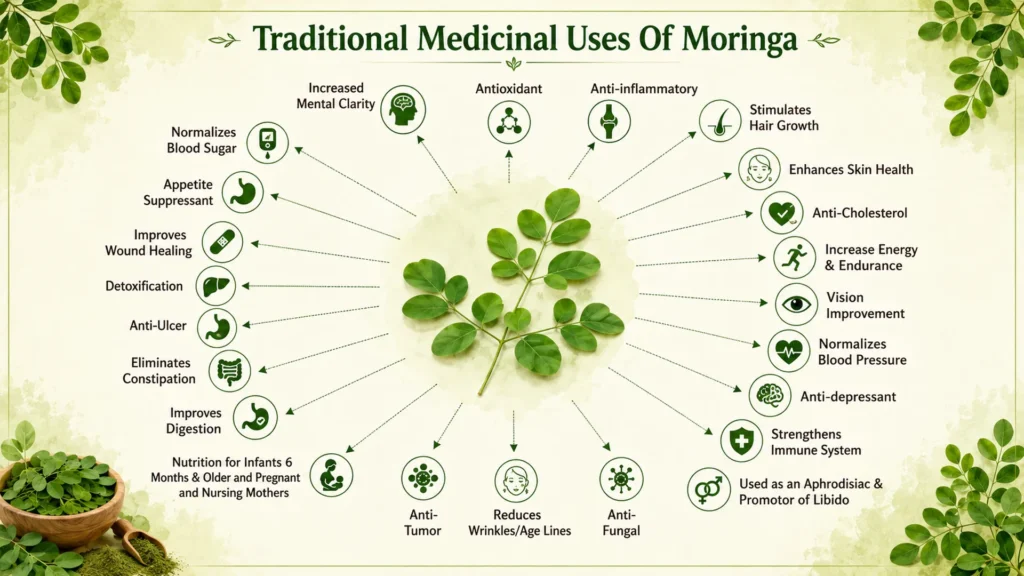
Ayurvedic texts state that more than 300 diseases may be treated using the remarkable healing properties of the Moringa tree and its extracts, including its essential oil.
Moringa leaves are best known as an exceptional source of nutrition and a natural energy booster.
Unlike sugar-based stimulants, the energy provided by Moringa is sustained.
Moringa is also considered calming.
It is believed to help lower blood pressure and promote restful sleep.
Its detoxifying properties may result from its ability to purify water.
Moringa acts as a natural coagulant, binding to harmful substances and bacteria.
It is believed that a similar cleansing process may also occur within the human body.
[IMAGE PLACEHOLDER – Ayurvedic illustration showing the medicinal uses of Moringa.]
The strength of Ayurvedic healing lies in its trust in natural remedies.
Ayurvedic philosophy teaches that every living being is unique, while all life remains part of nature.
This ancient science views illness not merely as a disease, but as an opportunity to discover the underlying imbalance within the body.
Ayurvedic treatment seeks to care for the whole individual rather than simply treating the symptoms of disease.
Its objective is not only to cure illness but also to prevent it by identifying and correcting its root cause.
Ayurvedic texts explain that every individual possesses a unique constitution made up of three fundamental energies, known as the doshas:
- Pitta
- Vata
- Kapha
Balance among these three doshas indicates good health, while an imbalance in one or more of them may contribute to illness.
Moringa and its essential oil are believed to reduce excess Kapha and Vata, while supporting deficiencies in Pitta.
Better Protein Than Soy
Moringa is considered to have one of the highest protein ratios of any plant identified to date.
The protein found in Moringa is regarded as being comparable in quality to that of soy.
Food scientists once believed that soy was the only plant containing protein comparable to that found in meat, dairy and eggs.
Moringa has now been added to that very short list.
Some researchers even consider Moringa protein superior to soy protein because it is generally regarded as non-allergenic.
Proteins are broken down into smaller building blocks known as amino acids.
Moringa contains 18 of the 20 amino acids required by the human body, including all eight essential amino acids commonly found in meat products.
(Meat is a luxury that many people around the world cannot afford.)
The human body cannot manufacture these eight essential amino acids and must obtain them through food.
Moringa is one of the very few plants that naturally contains all eight.
More Impressive Than Olive Oil
Oleifera is a Latin word meaning “oil-bearing.”
The oil extracted from Moringa seeds is known as Ben Oil, owing to its high concentration of behenic acid.
Moringa oleifera seeds contain approximately 35–40% oil by weight and are capable of producing more oil per hectare than either sunflower or peanut crops.
The oil possesses several characteristics that many consider superior to olive oil.
It is used in:
- cooking
- cosmetics
- preservation
- machinery lubrication
Because it is highly resistant to becoming rancid, it has even been used as a lubricant in fine watches.
The material remaining after the oil has been extracted, known as seed cake, is used as livestock feed to increase milk production in dairy cattle.
Ayurvedic Remedies Using Moringa Products
Ayurvedic remedies prepared from Moringa products have traditionally been used in the treatment of:
- liver disorders
- urinary tract infections
- dysmenorrhoea
- assistance during labour and childbirth
- improving the secretion of breast milk in nursing mothers
- anaemia
- sexual dysfunction
- nervous debility
- skin disorders
- infections caused by pathogenic organisms
The major health benefits attributed to the essential oil extracted by steam distillation from the leaves of the Moringa tree are described below.
Enormous Benefits for the Skin
Moringa essential oil offers exceptional benefits for the skin, primarily because of the rich nutrients and antioxidants present in the leaves, which help support healthy skin.
Moringa leaves are regarded as a nutritional powerhouse, containing:
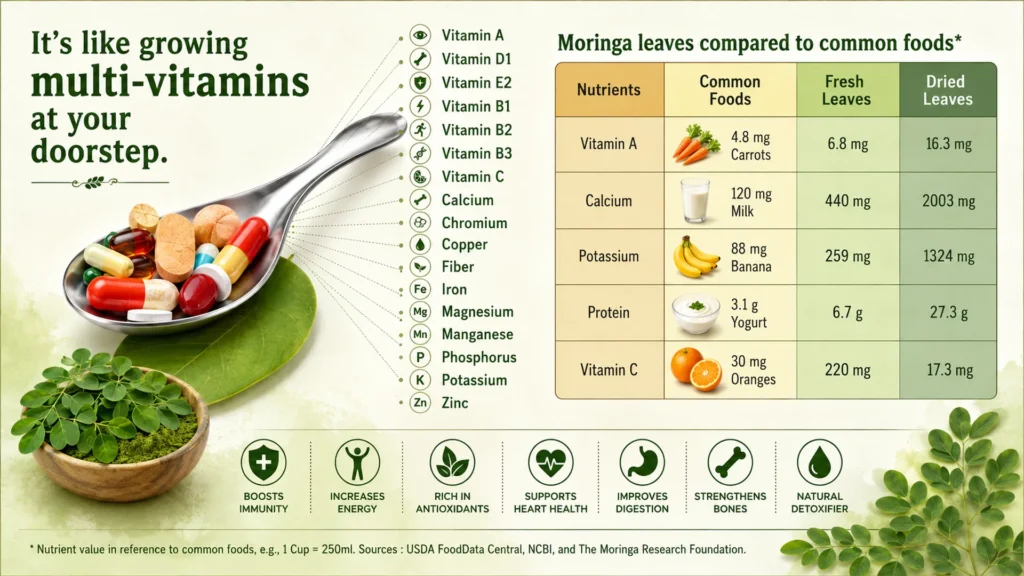
- more than seven times the Vitamin C found in oranges
- more than four times the Vitamin A found in carrots
- more than four times the calcium found in milk
- more than three times the potassium found in bananas
- more than twice the protein found in milk, gram for gram
Moringa essential oil possesses antibacterial, antimicrobial, antifungal, antioxidant and anti-ageing properties, making it useful in addressing numerous skin concerns.
Many visible signs of ageing, including wrinkles and dull, lifeless skin, are believed to result from the activity of free radicals.
The approximately 46 antioxidants present in Moringa help combat many of these effects.
Moringa oil naturally cleanses, nourishes and protects the skin.
Blending three drops of Moringa oil with a small quantity of coconut oil and applying the mixture to:
- acne
- cuts
- scrapes
- blackheads
- scars
- burns
- rashes
- insect bites
may assist in faster healing because of its antiseptic and antimicrobial properties.
Similarly, gently massaging the skin with two to three drops of Moringa oil mixed with olive oil may help improve skin elasticity by nourishing skin cells, removing impurities, reducing excessive dryness and moisturising the skin.
A 2007 study entitled “Anti-fungal Activity of Crude Extracts and Essential Oil of Moringa oleifera Lam.”, conducted by the Institute of Bioagricultural Sciences, Taiwan, stated:
“Essential oil extracted from the leaves of Moringa showed a total of 44 compounds. Isolated extracts could be of use for the future development of anti-skin disease agents.”
Because of these properties, Moringa oil is widely used as an ingredient in:
- soaps
- facial creams
- body washes
- massage oils
- anti-ageing creams
You may also add three to four drops of Moringa oil to a mild skincare cream or lotion to help alleviate various skin conditions.
More Than Just a Complete Food
Moringa leaves contain:
- Vitamin A
- Vitamin B1
- Vitamin B2
- Vitamin B3
- Vitamin B6
- Vitamin B7
- Vitamin C
- Vitamin D
- Vitamin E
- Vitamin K
They also contain numerous amino acids, including:
- leucine
- methionine
- lysine
- isoleucine
- threonine
- valine
- tryptophan
- phenylalanine
together with many non-essential amino acids, making Moringa a remarkably complete food for the body, mind and soul.
It is therefore no surprise that our ancestors valued this herb so highly.
Adding two drops of Moringa oil to warm bath water may help:
- relieve stress
- cleanse the body
- promote mental calmness
- reduce fatigue
Massaging the body with four drops of Moringa oil blended with almond oil may assist in:
- relieving rheumatic pain
- reducing inflammation
- eliminating excess fluids through urination
- boosting the immune system
- helping protect the body against harmful infections
Moringa essential oil is light in texture, allowing it to spread easily and penetrate deeply into the skin.
In this way, its beneficial nutrients are readily absorbed.
The oil has also traditionally been used as a natural cleanser for removing excess oil and dirt from the hair.
Massaging the scalp with three drops of Moringa oil blended with coconut oil may help:
- cleanse the hair
- nourish the scalp
- reduce dandruff
- restore a natural shine to the hair
Scientific Evidence
The long-recognised Ayurvedic health benefits of Moringa and its essential oil have been investigated in numerous scientific studies.
A 2003 study, entitled “Hepatoprotective Activity of Moringa oleifera on Antitubercular Drug-Induced Liver Damage in Rats,” concluded that treatment with Moringa oleifera leaves appeared to improve recovery from liver damage caused by antitubercular medication.
Another study, published in PubMed by Noel Vietmeyer of the U.S. National Academy of Sciences, reported:
“The results indicate that this plant possesses antioxidant, hypolipidaemic and anti-atherosclerotic activities and has therapeutic potential for the prevention of cardiovascular diseases.”
Researchers at the University of Agriculture, Faisalabad (Pakistan) also investigated Moringa oleifera based on its phytochemical composition, pharmacological properties and medicinal applications.
Their findings indicated that various parts of the tree—including the leaves, roots, seeds, bark, fruit, flowers and immature pods—may possess:
- cardiac and circulatory stimulant properties
- antitumour activity
- antipyretic activity
- antiepileptic activity
- anti-inflammatory properties
- anti-ulcer activity
- antispasmodic activity
- diuretic properties
- antihypertensive effects
- cholesterol-lowering properties
- antioxidant activity
- antidiabetic activity
- hepatoprotective properties
- antibacterial activity
- antifungal activity
These properties have contributed to the widespread traditional use of Moringa in indigenous systems of medicine, particularly throughout South Asia.
Several additional studies have likewise reported antioxidant, hypocholesterolaemic, antifungal and antibacterial properties associated with the Moringa tree and its essential oil.
Other Health Benefits
Apart from the major health benefits already discussed, various parts of the Moringa tree, together with the essential oil extracted from its leaves and seed pods, have traditionally been used to:
- strengthen the immune system through their Vitamin C content
- reduce the risk of conditions such as Alzheimer’s disease, atherosclerosis and cataracts through the presence of Vitamin B3
- stimulate digestion through their fibre content
- support healthy blood circulation
- assist normal brain function
- help treat anaemia because of their high iron content
- support healthy eyesight through their Vitamin A content
In addition to these recognised benefits, numerous traditional home remedies involving Moringa have been passed down through generations as part of Ayurvedic healing and grandmother’s remedies.
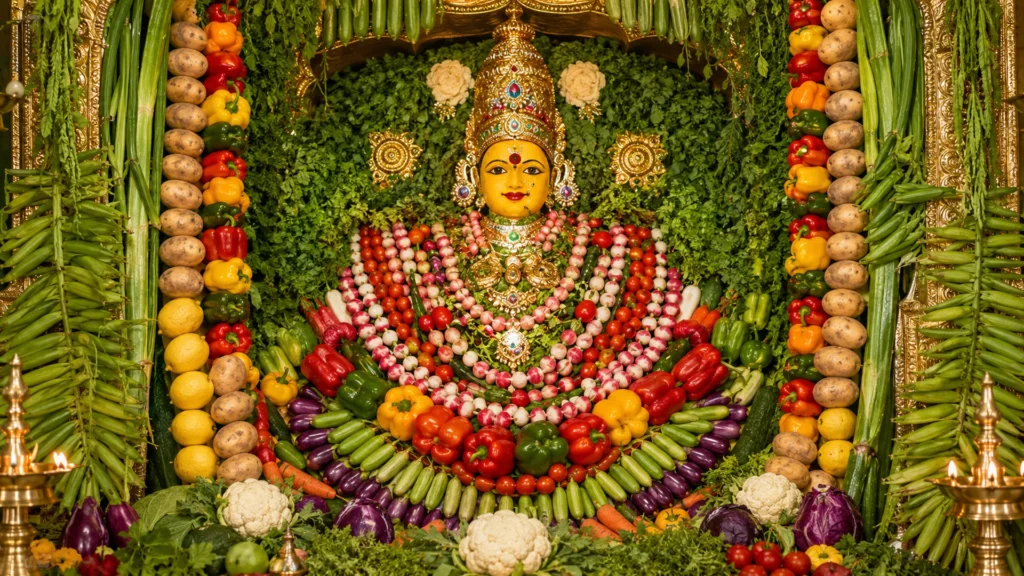
Kanaka Durga Temple, Vijayawada, Andhra Pradesh, India
In the image above, Amma is decorated with potatoes, anar (pomegranate) seeds, karela, bell peppers, okra (bindi), chichinda (snake gourd), a variety of herbs (drumsticks), cabbage, bananas, plantains, pumpkin, brinjal, limes, papaya, baby tomatoes and many other fruits and vegetables.
Question
Why is a banana leaf used as the base for the foods we offer to Amma?
Answer
Our wise ancestors commonly used banana leaves instead of plates when eating their meals.
There are numerous benefits associated with this practice.
Placing hot food on a banana leaf releases natural compounds from the leaf, which are believed to aid digestion.
As the hot food rests on the banana leaf, the leaf softens and releases chlorophyll. At the same time, it imparts a subtle flavour that enhances the six tastes of the meal offered to Amma.
Amazing, isn’t it? 🙂
One should sit before the food with gratitude.
When expressing gratitude, one should first remember the plant from which the food originated and the effort involved in cultivating it.
Secondly, one should think about the person who prepared the meal and appreciate the care taken in its preparation.
Thirdly, as the food is served, one should appreciate the person serving it with gratitude.
Finally, one should offer thanks to Amma Shakambhari/Marieamman.
Thereafter, one’s thoughts naturally extend to three further aspects:
- the environment
- the conditions under which the food was produced
- the circumstances that made the meal possible
In this way, the food has been appreciated four times before it is eaten.
Our body is then considered to be mentally prepared to receive and digest the food.
For this reason, it is traditionally advised not to speak while eating.
One should also avoid eating while watching television.
The body reacts to the emotions and vibrations produced by the scenes being viewed, which may negatively affect digestion.
The relationship between the mind and food was considered a priority by our ancestors.
Although many people today may disagree with these views, the principles behind them have been practised and appreciated for generations.
Eating from a banana leaf is traditionally believed to assist in reducing the risk of ailments such as:
- diabetes
- high blood pressure
- high cholesterol
- cancer
- ulcers
- heart disease
- piles (haemorrhoids)
If anyone in your family suffers from any of these conditions, kindly read this information and share it with others.
Related Articles
This article relates to another article published on www.dipika.org.za entitled:
“Shakambhari Devi (The Mother of Nourishments)”
For your convenience, it may be viewed here:
http://dipika.org.za/wp-content/uploads/2015/04/Shakambhari-Devi.pdf
Another related article on DIPIKA that may be of interest is:
“Mother Durga’s Favourite Foods According to the Puranas.”
This article may be viewed here:
Disclaimer 1
Please note that the information provided above is shared in good faith.
Dipika’s free services are not intended to replace professional medical care.
The information presented in this article is provided for general educational purposes only and should not be relied upon as a substitute for professional medical advice, diagnosis or treatment.
Disclaimer 2
Never take essential oils internally.
Pure and organic essential oils are highly concentrated liquids and should always be used in a properly diluted form.
This article is intended solely for informational purposes and is not intended to diagnose, treat or replace prescribed medication or professional medical advice.
Always consult your Ayurvedic practitioner before using the appropriate essential oil for your specific health condition and individual constitution.
Disclaimer 3
Please note that Dipika is not affiliated with any Hindu group or organisation.
At Dipika, we choose to remain independent so that information can be presented without institutional influence or sectarian bias.
Our aim is simply to preserve, promote and share the timeless knowledge of Sanatana Dharma in good faith for the benefit of all.