

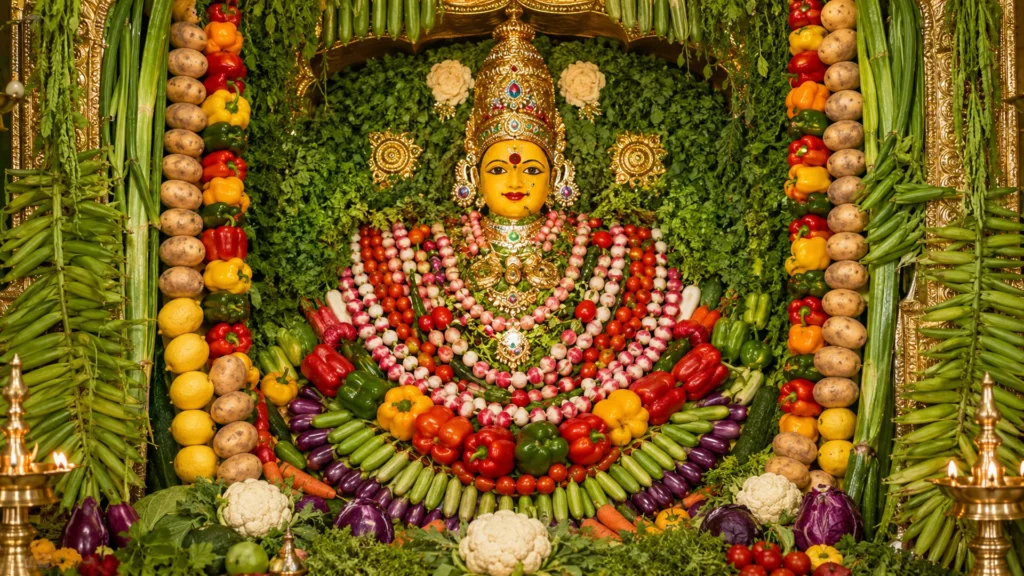
“Om Am Sham Shakambhari Devi Sakala Sthaavara Jangama Rakshaki Dhana Dhaanya Vrithi Kaarini Namah!”
KINDLY NOTE:- This article pertains to a topic from another article released on www.dipika.org.za called “Shakambhari Devi (the Mother of Nourishments)”. This particular article is linked here, for your convenience http://dipika.org.za/wp-content/uploads/2015/04/Shakambhari-Devi.pdf
The month of Aadi Madham is widely known as the Tamil month of Aadi (17th July – 16th August 2015). In this month, many Hindus of South Indian descent prepare foods with ingredients like pumpkin, herbs (generally drumstick), mixed vegetables, etc., for the Mother (Mata/Ammen). Ammen’s devotees know Her just as Ammen/Marieammen, but Her other name is Mother/Ammen Shakambhari Devi. Mother Shakambhari is an incarnation of Devi Durga, the consort of Lord Shiva. In the times of famine, Mother Durga (in Her expansion, Mother Shakambhari) descended on this earth planet and distributed vegan food to the hungry. (“Shaaka” is derived from a Sanskrit word meaning vegetables and vegan food; and “Ambari” is derived from another Sanskrit word meaning “one who wears or bears”). In fact, the name Shakambhari comes from “shakam” joined with the root “bhri” (“shaka” meaning vegetables or food and root “bhri” meaning to nourish). Mother Shakambhari is mentioned in the 11th chapter of the Durga Path verses 46-49, as well as in Chapter 28 of the 7th book of the Devi Bhagavatam Purana, titled, “On the glory of Shakambhari/Shatakshi Devi”.
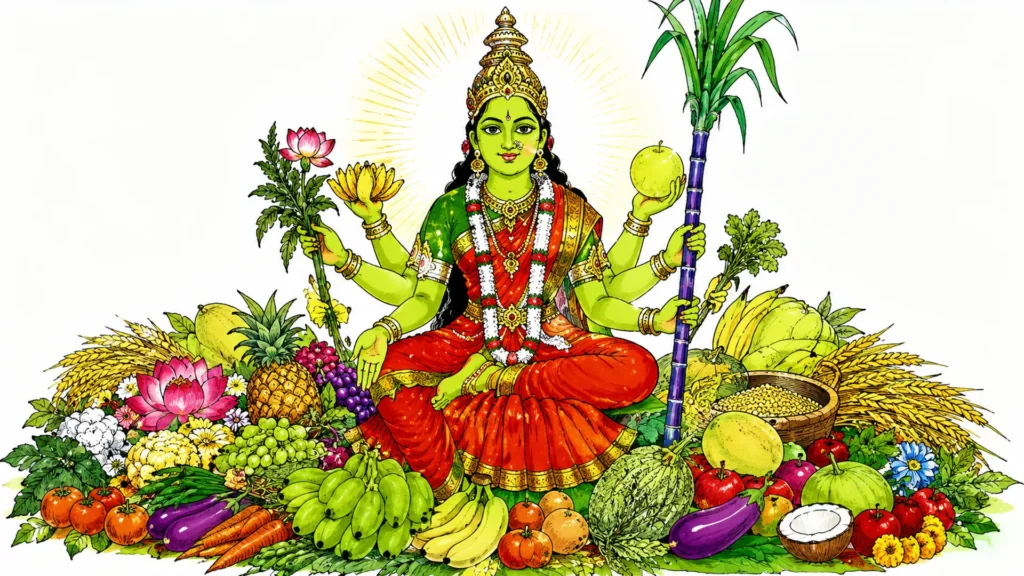
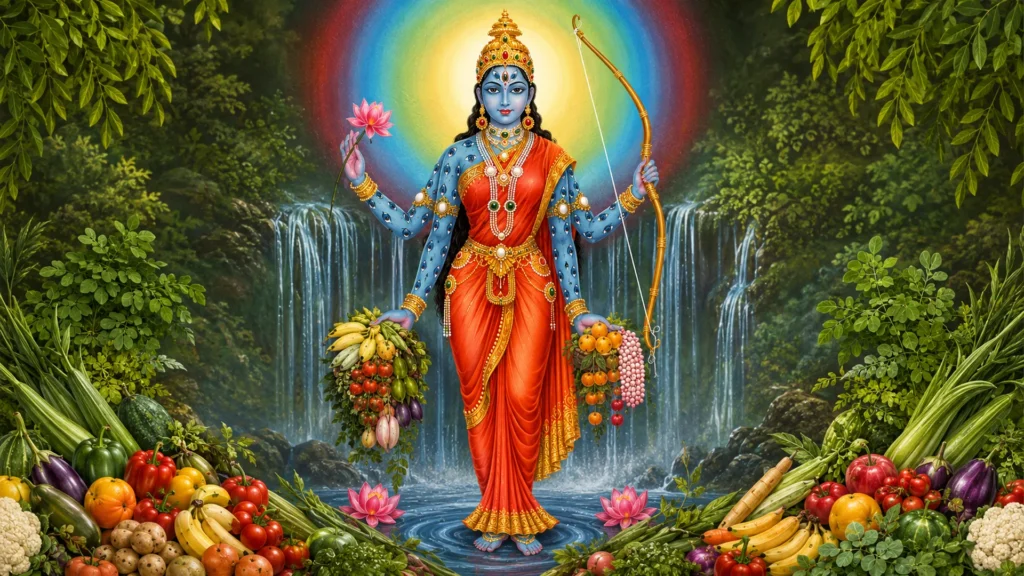
The splendid form of Shakambhari Devi is described in detail in the Durga Path (Saptashati) in the 11th chapter. According to the Durga Path, Mata’s appearance is of the colour blue (a picture of the Mother, with this description, is provided at the end of this article). Her eyes are like lotus flowers. Her navel is slightly below the normal place with three curves. She bears breasts of a virgin. A lotus is carried in her hand, which is swarmed by bees. Another of Her hands carries arrows. Other hands carry flowers, roots and vegetables. The fruit symbolises the goddess of vegetation, who feeds us and aids in the prevention of disease. In another hand, she is carrying a bow – symbolising her fierceness. This is the appearance of Shakambhari Devi, Shatakshi or Durga Devi. This merciful mother removes grief and calamities and terrorizes the demons. The devotee of this Mother, through worshipping Her by hymns, meditation, japa and bhajans, attains the benefits of food, drink and infinite bliss.
This particular question seems to be one that is frequently asked – “why is pumpkin curry, drumstick herbs and mixed vegetable curry always prepared and offered together with sour porridge to Amma in this month?” A good question; and the answer lies in the pictures presented in this article. To have a degree of understanding and context, kindly view the picture supplied below.
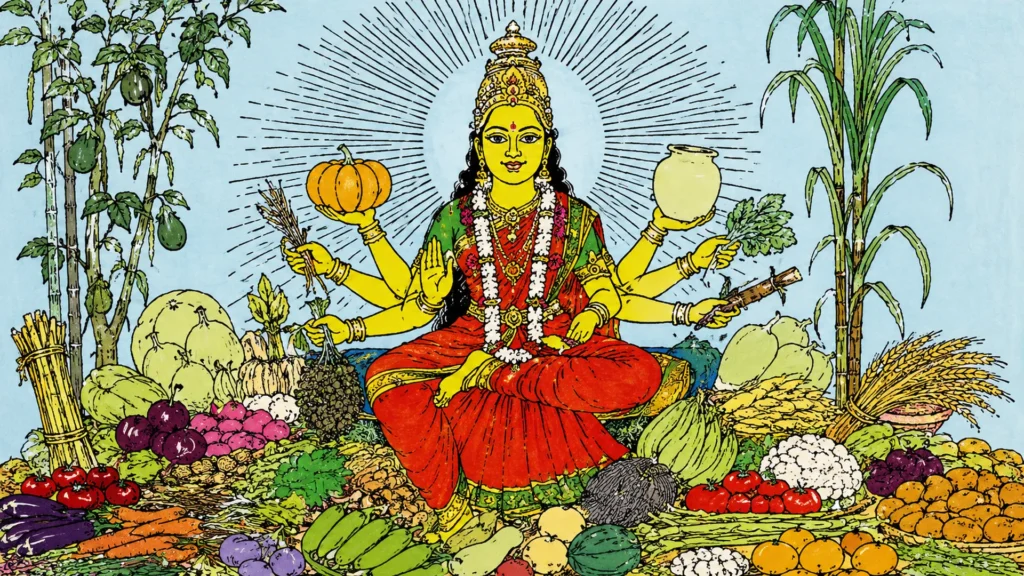
Notice the pumpkin in Amma’s uppermost right hand, a variety of herbs, spanspek in her top left hand, corn, pineapple, bananas, snake gourd (chichinda), grapes, lime, green bananas, carrots, butternut, squash, bindi, mangoes, tomatoes, potatoes, brinjal, roots, etc.
These three preparations – pumpkin curry, drumstick herbs and mixed vegetable curry – have always been prepared since ancient times for Amma, and these are the reasons for this. For the benefit of those who may not know how to prepare these offerings, we are providing the method for doing so.
NB
- In the recipes provided below, garlic and onions are used as ingredients. However, some will not use garlic or onions, as some may argue that it’s not SATTWIC (mode of purity) – which it isn’t, this is true. Garlic is a food (in the mode of ignorance) and onion is a food (in the mode of passion) according to Ayurvedic texts. So the onus is wholly upon oneself to use these ingredients or not. If you feel it’s not acceptable then by all means omit that in the ingredients. One must remember that one has a choice.
- When preparing any offerings to Amma or to any deity for that matter, I always strongly suggest that: one must (of course) have a bath and wear clean clothes; talking is prohibited (one may cover his/her mouth with a cloth) as the saliva from one’s mouth can easily enter into the offerings thus rendering the offerings soiled and unfit for Amma to consume; no shoes should be worn (unless it is only used in the kitchen area); when preparing offerings to Amma one should mentally chant (one should avoid chanting out loud – the only reasoning being that saliva could enter the preparations, and make them unclean to offer to Amma. Her mantras, for example “Om doom durgaayai namah”, etc. should be chanted during preparation, as the vibrations one expends, affects the offerings – which Amma will be accepting.
Kindly note the following recipes are leaning towards a South Indian flavor due to this month being the Tamil month of Aadi.
Do note:- The abbreviations below are as follows… tbsp (Tablespoon), tsp (teaspoon)…
1. PUMPKIN CURRY
The humble pumpkin is a very versatile vegetable. This vegetable gift from Amma, gifted when she descended to this planet should not be underestimated. Every part of this vegetable is used. My favourite being the herbs. The health benefits of the pumpkin are numerous and well-known, thus I won’t go into detail.
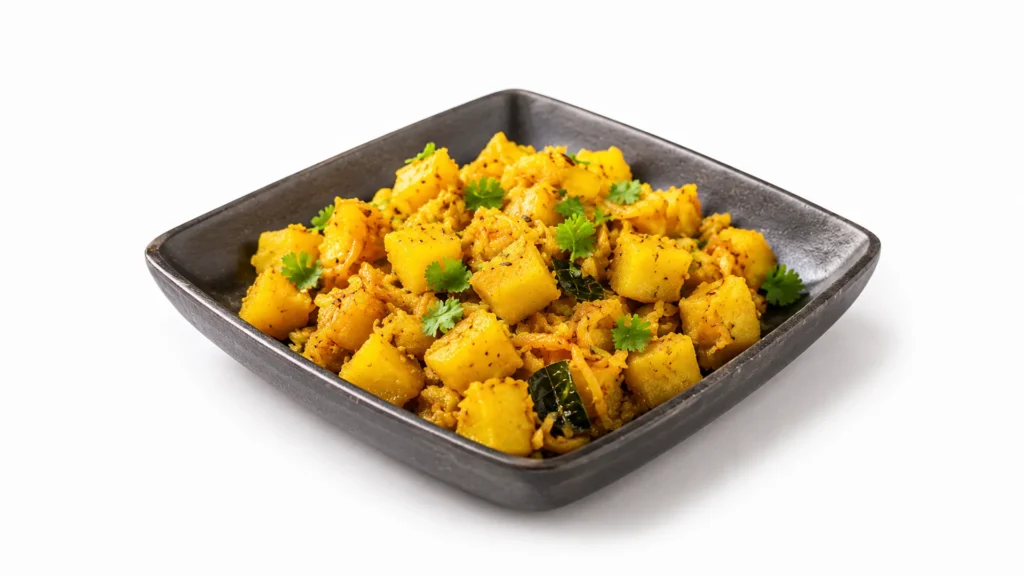
Spicy Pumpkin Masala Curry
PUMPKIN HERBS
PUMPKIN FLOWER FRITTERS
Wash the flowers of the pumpkin (about 10) well and keep aside.
2. DRUMSTICK HERBS
Binomial name (a.k.a.) – Moringa oleifera, Sanskrit – Muragee, Hindi – Sehjan ki phali, Tamil – Murungakkai.
Many parts of the moringa tree are edible. Traditional uses of the moringa as food vary widely, for example: the immature seed pods, called “drumsticks”, are popular in Asia and Africa; the leaves are eaten, mature seeds (oil pressed from the mature seeds), roots and the flowers. Many experts have advocated moringa as “natural nutrition for the tropics.”; “the nutritional properties of moringa are now so well known that there seems to be little doubt of the substantial health benefit to be realised by consumption of moringa leaf powder in situations where starvation is imminent”. Comments like this have made moringa much more popular. Always choose fresh leaves – that do not look wilted or old. Check if there is sign of discolouration or yellowing. Ensure there are no black spots on the leaves.
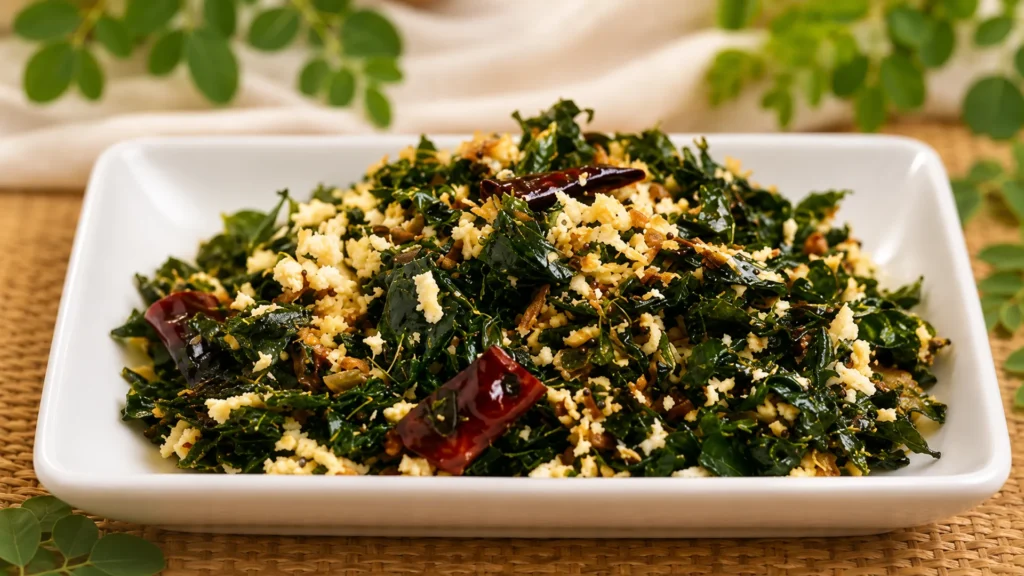
Simple drumstick herbs curry
3. INDIAN MIXED VEGETABLE CURRY
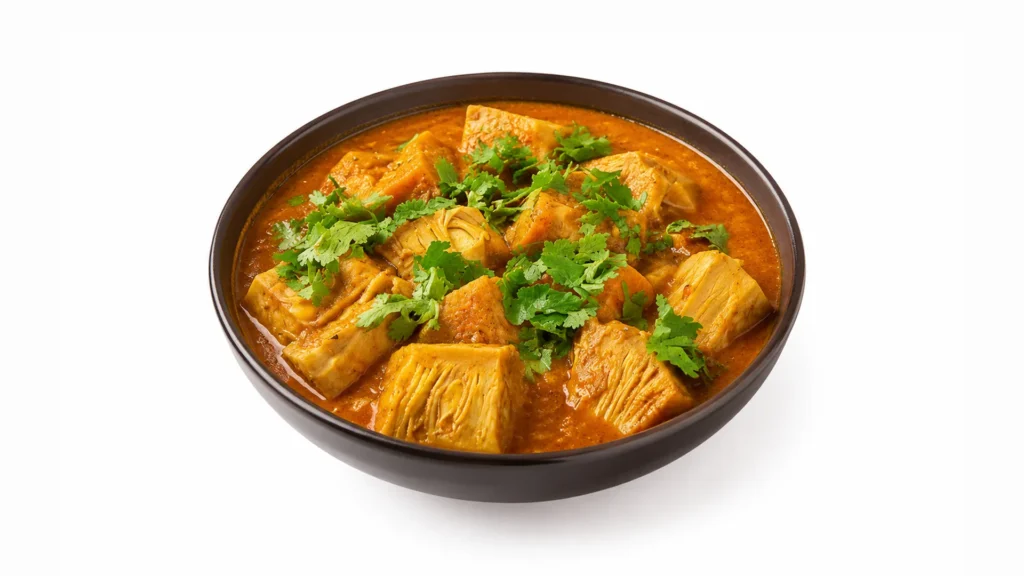
Panasa (Jack-fruit)
a.k.a. jack tree, jakfruit. In the Srimad Devi Bhagavatam 8th book chapter 24 “On the worship of the Devi”, Lord Narayan explained that Devi loves PANASA (jack-fruit). Keep in mind that this is an optional preparation and does not form part of the three main (compulsory) dishes listed above – however, more preparations for our merciful Mother are always welcome.
Jackfruit Curry
Karkati (cucumber)
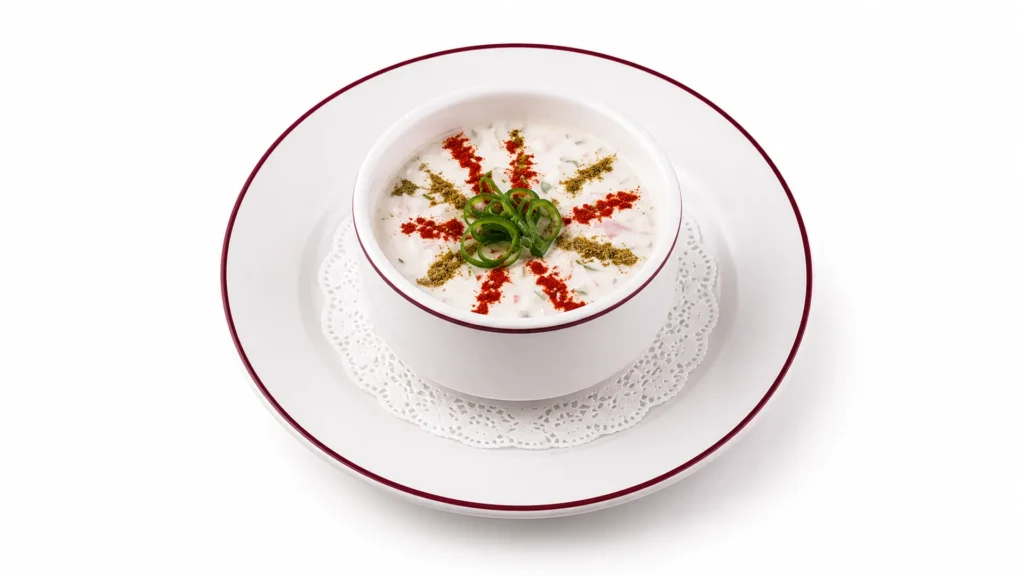
In the Srimad Devi Bhagavatam 8th book chapter 24 “On the worship of the Devi”, Lord Narayan explains that Devi loves Cucumber and yoghurt. Keep in mind that this is an optional preparation and does not form part of the three main (compulsory) dishes listed above – however, more preparations to the Mother are always welcome.
Cucumber Raita Recipe
Koozhu (Fermented Ragi {millet} Porridge)
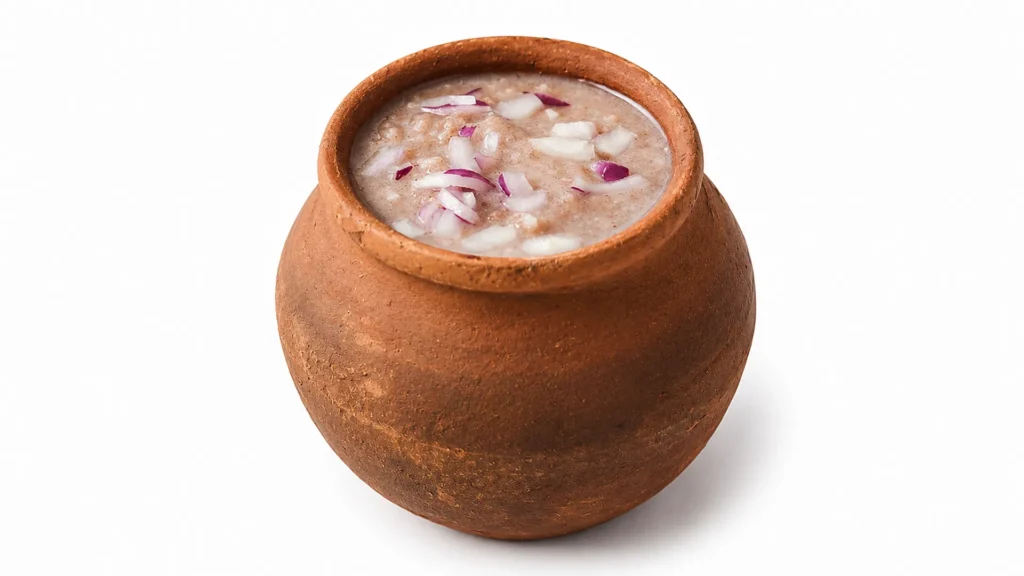
Koozhu is the Tamil name for porridge prepared from millet. In India, finger millet is locally called by various name including ragi, kezhvaragu, keppai and nachani.
F.Y.I… MILLET AND MAIZE are not the same. Millets have many useful applications in the world of food, especially for gluten-free cooking and beneficial for those who has gluten or wheat intolerances and allergies. Millets are part of the grass family Poaceae, as is maize, but they are all small-seeded cereals. Maize produces its seeds on separate female inflorescences called “ears,” while millets produce their seed at the top of the plant, very near the male inflorescence. In Tamil Nadu, parts in India and other places, koozhu is consumed for breakfast or lunch. Koozhu (the drink) has many health benefits. It is made of millet (ragi) which is very healthy. It is fermented and its properties are increased many fold by this process. Also, koozhu has a cooling effect on the body and is thus suitable for consumption during the hot summer period. Consuming a glass of koozhu is known to satisfy hunger for approximately 8 hours. It is filling and very healthy. Koozhu is often consumed at Marieamman temple festivals across Tamil Nadu. Koozhu is a particularly traditional and ancient recipe of South Indians – which is prepared most often during Aadi Madham. This month is considered to be auspicious for the spiritual worship of Amma as she is said to be very powerful during this month. During this month, Koozhu is prepared and offered to Marieamman during pooja in Tamil Nadu by native Tamil people in India. In English, it is known as “porridge of finger millet”.
Koozhu is also called the “Poor person’s food”, since it can be prepared easily as there is no need for many ingredients – it is simply a mixture of three ingredients – curds, cooked millet and an onion to taste, which is generally easily affordable. Generally, people in India prefer Koozhu to soda as it is healthier than soda or any other cooldrink.
Benefits of Koozhu
- It is beneficial to one’s health and it is a cooling drink which helps to regulate the body’s temperature. As such, it is preferred during summer times.
- It contains significant amounts of iron, vitamin B, proteins, amino acids, phosphorus, magnesium and potassium which are essential to good health.
- It contains calcium which helps in bone strengthening.
- It is easily digestible, and people who have digestion problems can have this drink and overcome that problem with spectacular results. It can be consumed as breakfast.
- It is beneficial in weight loss as koozhu is made out of ragi (millet); it contains an amino acid named tryptophan which helps in reducing weight as well.
- It is beneficial in reducing high blood pressure and asthma.
- It is rich in proteins and helps in muscle growth and repairs skin.
Kanaka Durga Temple, Vijayawada, Andhra Pradesh, INDIA
In the picture provided above Amma is decorated with potatoes, anar (pomegranate seeds), karela, bell peppers, okra (bindi), chichinda (snake gourd), a variety of herbs, cabbage, bananas, plaintains, pumpkin, brinjal, limes, papaya, baby tomatoes, etc. .
Question:- Why is a banana leaf used as a base for the foods we offer to Amma?
Answer:- Our awesome ancestors commonly used banana leaves to eat food in place of plates. There are numerous benefits for this. Placing the offerings on the banana leaf, after being heated for consumption, awakens the digestive acids from the banana leaf, which aid in digesting the offerings that Amma is going to consume. Also, after placing the food heated for consumption on the banana leaf, the leaf swelters, thus releasing the chlorophyll. Not only that, a flavour is produced at that time, that awakens the six tastes in Amma. Amazing, isn’t it? 🙂 One should sit thankfully in front of the food. When thanking, one should remember about that plant and how it was cultivated. Secondly, when thanking the chef, the method of preparing the food should come to one’s mind. Thirdly, as the food is being dished out, we can see the server doing this, and thus will show them gratitude. Next we thank Amma Shakambhari/Marieamman, and then three aspects – the environment, the condition and the situation comes to mind. Thus, one has now thought about the food four times before eating it. Now our body is completely fit to digest the food that we are going to eat. That is why it is advised to refrain from talking whilst eating. One must try to refrain from eating food while talking or when watching television. The body will react according to the vibrations depicted in the various scenes that are seen. This will negatively affect the body. The two aspects of mind and food, were top priorities for our former generations. However, in this day and age, a new mindset and way of life seems to have been adopted. Some may disagree with these points, however the basis for these points have been proven and make sense, among other things. Eating on a banana leaf helps in the reduction of diseases like diabetes, high blood pressure, cholesterol, cancer, ulcer, heart diseases, piles, etc. . If anyone in your family is suffering from any of these diseases mentioned above, please read this and share with others.
This article pertains to a topic from another article released on www.dipika.org.za called “Shakambhari Devi (the Mother of Nourishments)”. This particular article is linked here, for your convenience – http://dipika.org.za/wp-content/uploads/2015/04/Shakambhari-Devi.pdf
Another related article that may pique your interest on DIPIKA is called “Mother Durgas’ Favorite Foods According To The Puranas”. This particular article is linked here, for your convenience – http://dipika.org.za/?p=58
DISCLAIMER 1:- Do note that the information given above is given in good faith. Dipika’s free services are not intended to be a substitute for any medical care. The information above is intended for general education purposes and should not be relied upon as a substitute for professional and/or medical advice.
DISCLAIMER 2:- Do note that Dipika is not affiliated to any Hindu group or organization. We at Dipika choose to remain an independent repository of spiritual advice. We appreciate that there are variances between organisations and humbly request that if our views differ from yours that you respect our decision not to conform to the prescripts of your particular organisation. We remain committed to spiritual advice which is based on scripture.
Thank you so much for taking the time to read this article. We pray that this article will assist you in some way and we also pray that it helps you to appreciate the beauty and remarkable foresight of our ancient Hindu culture. We wish to educate all readers and demystify the path of Hinduism (Sanatan Dharma). Please feel free to share these articles with friends and family who do not have direct access to our website or articles. If you use the articles in any form including blogs and/or as part of other articles kindly credit our website as a source. We hope that the articles serve as a reference to you and your family when you need clarification of certain topics.
Jai Shree Mata Shakambhari devi kee jai.
Jai Shree Marieamman devi kee jai.