
In the Bada Bandi Mochana’s Vindhyeshvari Chalisa, the following appears, “Bowing again and again to Vindhyeshvari Devi (Mother Durga), repeatedly bowing to the Mother of the three worlds, the One who never delays in helping Her devotee. Whosoever feeds the brahmanas in the Navaratras, Devi surely becomes pleased with that person and bestows a meritorious child to that person. One should make an offering of Dvaja (flag/banner) and a coconut (it must contain water); and one should also perform puja to Devi as well, observing all the requisite rites to Her.”
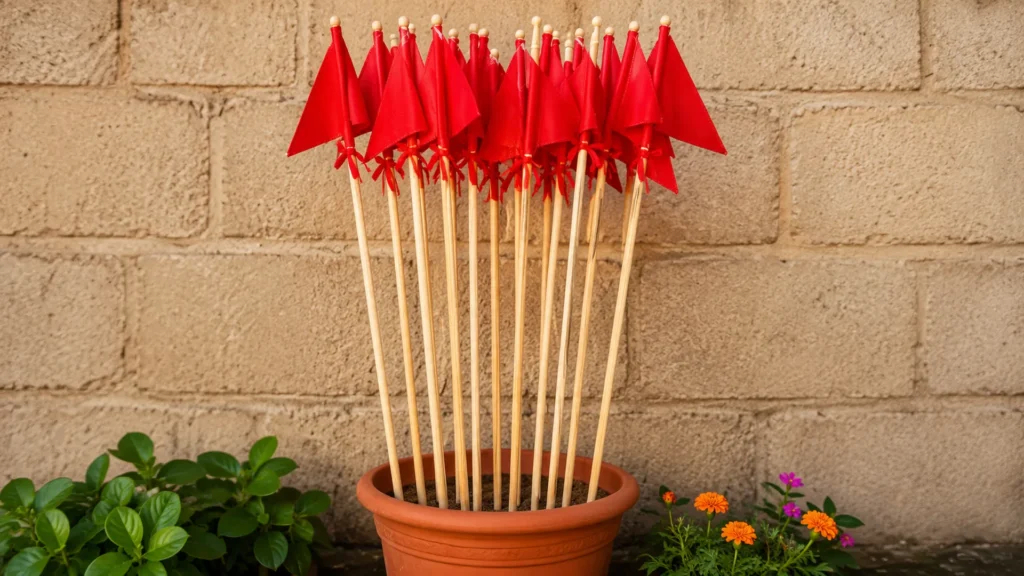
As such, one can read from the above information the reason behind many devotees of the Mother offering the Mother, in her nine different expansions, small red flags (Jhandis) on any of the nine days of Navaratri. Kindly note that this is an optional offering. An example of an offering of nine flags is depicted in a picture below.
If one desires to make this offering – i.e. hoist these nine little red flags (Jhandis) – then one may follow the procedure outlined below.
Preparing the Jhandis
You should have the following prepared before the start of the hoisting of the Dvajas (flags):
- 1 large pot
- Clean sand to fill the pot
- 9 thin bamboo sticks, or 9 one-metre-long sticks
- 9 little red flags, 15 cm by 15 cm and triangular in shape; the cloth can be plain red or have a printed picture of the Mother
Wash the bamboo sticks with turmeric water. Let the sticks dry. Add the sand to the pot. Smear each of the sticks with red sindhoor while chanting, “Om doom durgayai namah”. Then tie one Jhandi (red flag) to each bamboo stick.
Planting the Nine Jhandis
As you place each bamboo stick into the sand in the pot, chant the following mantras – one for each Devi. The Goddess is worshipped in nine forms. They represent the nine phases of the Goddess’ life.
Chant:
- Sabse bole Shreemati Shailputri devi kee Jai (plant the 1st bamboo stick), then chant.
- Sabse bole Shreemati Brahmacharini devi kee Jai (plant the 2nd bamboo stick), then chant.
- Sabse bole Shreemati Chandraghanta devi kee Jai (plant the 3rd bamboo stick), then chant.
- Sabse bole Shreemati Kushmanda devi kee Jai (plant the 4th bamboo stick), then chant.
- Sabse bole Shreemati Skandamata devi kee Jai (plant the 5th bamboo stick), then chant.
- Sabse bole Shreemati Katyayani devi kee Jai (plant the 6th bamboo stick), then chant.
- Sabse bole Shreemati Kalaratri devi kee Jai (plant the 7th bamboo stick), then chant.
- Sabse bole Shreemati Mahagauri devi kee Jai (plant the 8th bamboo stick), then chant.
- Sabse bole Shreemati Siddhidatri devi kee Jai (plant the 9th bamboo stick).
Where to Keep the Jhandis
The pot, which now has the bamboo sticks with red flags placed in it, is kept at your Devi Thaan (a place designated for offering Devi prayers and dhaar in your yard).
Apartment Guidance
A question will be asked by some: “I live in an apartment; what should I do?”
In this case, if your flat has a balcony, then place the pot outside on the balcony. If you don’t have a balcony, place the pot next to your prayer place by your Lakshmi lamp. Do use your discretion.
What to Do with the Jhandis Afterwards
What do you do with these nine poles or sticks and flags for the next year’s Navaratri? You may burn the sticks and flags in the havan kund after your next Navaratri puja is completed. I have an uber-environmentally friendly outlook on life, and this is what I advise you should do.
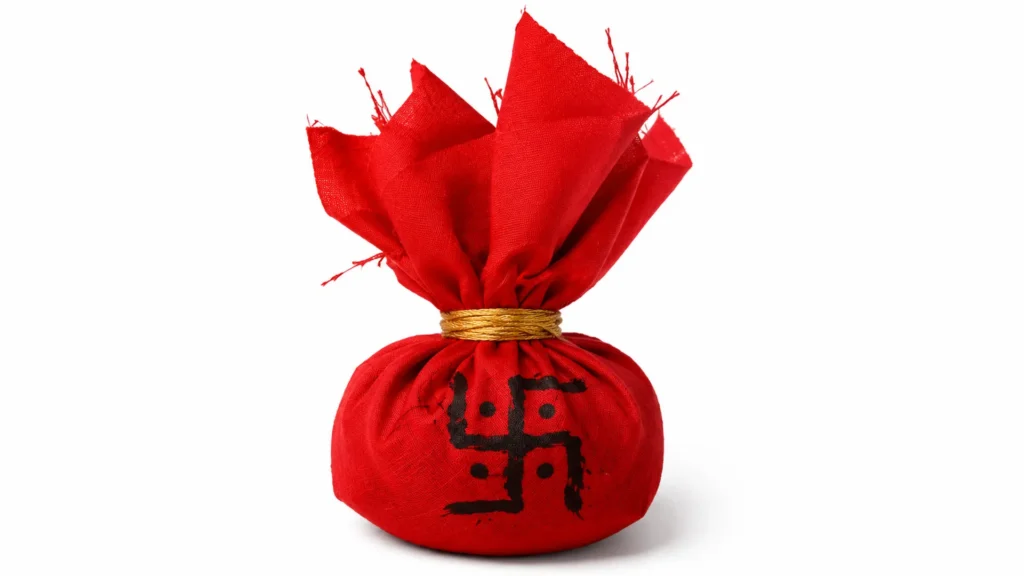
When the havan contents are totally burned out and cooled down, divide the contents into four parts. Place a quarter of the burnt contents on a red cloth measuring 20 cm by 20 cm. Bring together the four corners; it then becomes like a pouch (potli). Tie the middle with a rubber band or thin red cloth. Mark it with a swastika sign using a Koki marker.