

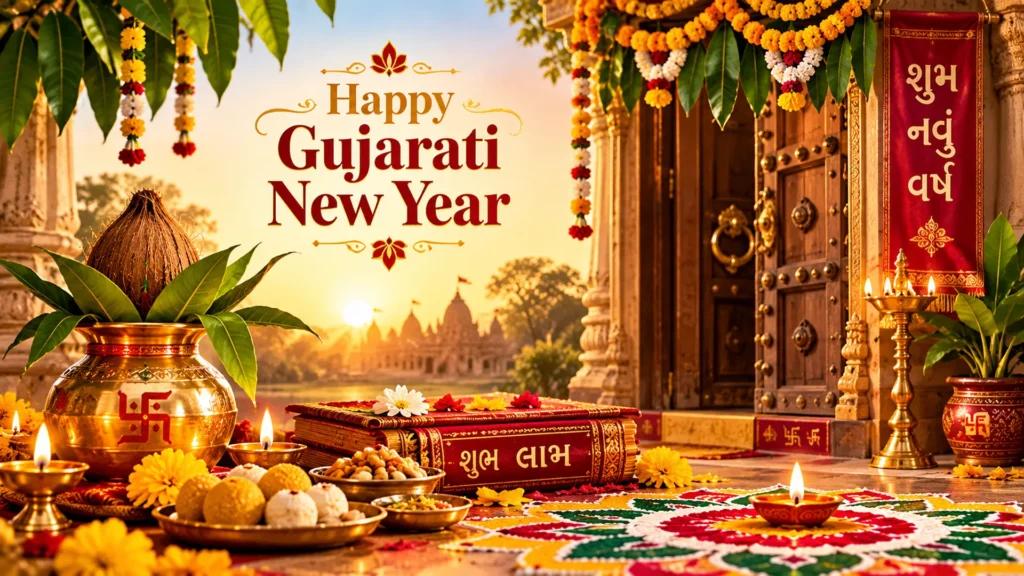
Gujarati New Year, known as Bestu Varas or Nutan Varsh, begins the Vikram Samvat calendar on Kartik Sud Ekam. The observance centres on spiritual renewal, fresh financial beginnings, family bonds, forgiveness and auspicious worship.
Core Rituals and Traditions
- Early Morning Cleanse and Sabras Ritual: Families wake before dawn, bathe and dress in vibrant new clothes. In traditional Gujarati villages, an age-old practice involves buying salt, or Sabras meaning “all flavours,” from vendors first thing in the morning. This symbolises inviting good fortune and a flavourful life into the home.
- Chopda Pujan Worshipping Ledgers: Merchants, business owners and professionals perform this financial blessing. Old accounting books are closed, and new ledgers, or Chopda, or modern digital devices are inaugurated. Pages are marked with an auspicious swastika and the words “Shubh-Labh,” meaning auspiciousness and profit, using turmeric and vermilion while praying to Goddess Lakshmi and Goddess Saraswati.
- Govardhan Puja and Annakut: Coinciding with the New Year, devotees honour Lord Krishna’s protection of Gokul by lifting Govardhan Mountain. In temples, especially in Swaminarayan and Pushtimarg traditions, an Annakut, or “mountain of food,” featuring dozens of savoury and sweet dishes is offered to the Deity and later distributed as prashad.
- Matru Pitru Vandana and Seeking Blessings: Younger family members touch the feet of their parents and elders to seek their ashirwad, or blessings, for health and wisdom in the coming year.
- Saal Mubarak Exchanges: Relatives and neighbours visit one another to exchange greetings such as “Saal Mubarak” or “Nutan Varshabhinandan,” together with boxes of homemade sweets such as Mohanthal, Ghari and Shakarpara.
Cultural Highlights
| Element | Description |
| Decorations | Entrances feature fresh rangoli designs, and doors are decorated with torans made from marigold and mango-leaf garlands to welcome positive energy. |
| Festive Dishes | Meals blend sweet and savoury items such as Fafda-Jalebi, Khandvi, Doodh Pak and Lapsi, a sweet cracked-wheat dish that signifies good tidings. |
| Spirit of Forgiveness | Bestu Varas encourages clearing old personal grudges alongside old financial debts to start the year with a clean slate. |
Chopda Pujan at Home or Business
Performing Chopda Pujan on the night of Diwali or the morning of Gujarati New Year, or Bestu Varas, invokes the blessings of Goddess Lakshmi for wealth, Goddess Saraswati for knowledge and accounting accuracy, and Lord Ganesha as the remover of obstacles. The puja seeks prosperity in the business or household budget.
Prerequisites and Setup
Prepare a clean, elevated altar or workspace facing east or north.
Items Required:
- New account books, or Chopda, notebooks or digital devices such as laptops or tablets
- Kumkum or vermilion, haldi or turmeric paste, and chandan or sandalwood paste
- Unbroken rice grains or akshat, fresh flowers and a small flower garland
- Incense sticks or agarbatti, camphor and a brass or silver diya filled with ghee
- Sweets such as Mohanthal or laddoo, or dried fruits; fresh fruits; and betel leaves and nuts or paan-supari
- Clean red cloth, currency coins and a clean red pen
Step by Step Procedure
1. Cleanse and Set the Sanctum: Ensure ritual purity before beginning. Purify the space by sprinkling a few drops of water or Ganga jal. Spread a fresh red cloth over the altar or desk. Place images or murtis of Lord Ganesha, Goddess Lakshmi and Goddess Saraswati at the centre. Position the new account books or digital devices directly in front of the Deities.
2. Invoke Lord Ganesha and Light the Lamp: Light the ghee diya and incense sticks. Take a few rice grains and a flower in your right hand, close your eyes and pray to Lord Ganesha to bless the ceremony and ensure a smooth, obstacle-free financial year ahead. Place the rice and flower at the feet of the Ganesha murti.
3. Sanctify the Chopda Books or Devices: Apply a tilak using kumkum and haldi to the cover of each new account book or laptop. On the outer cover or first inner page, draw a swastika at the centre. Write “Shubh” on the left and “Labh” on the right using a clean red pen or kumkum paste. Draw two parallel vertical lines, representing Riddhi-Siddhi, on both outer edges for added stability and growth.
4. Inaugurate the Ledger Entries: Open to the first blank page of the book, or open a fresh spreadsheet file on a laptop. At the top write “Shree Ganeshaya Namah” or “Om Namah Shivaya” in red ink. Sprinkle a few rice grains, turmeric powder and fresh flower petals on the inaugural page as an offering to Goddess Saraswati. Place a silver coin or fresh currency bill on the page to signify incoming wealth.
5. Perform the Aarti and Offer Bhog: Offer fresh fruits, betel leaves with betel nuts and traditional sweets such as laddoo or Mohanthal to the Deities. Perform the Lakshmi-Ganesha Aarti using the lit camphor or diya. Ring a small bell while performing the rotation to invite positive sound vibrations into the premises.
6. Seek Blessings and Distribute Prashad: Bow down and touch the Chopda to your forehead, seeking blessings for ethical commerce, accurate records and steady financial growth. Share the sweet prashad with all family members, partners and employees present to celebrate the auspicious start.