

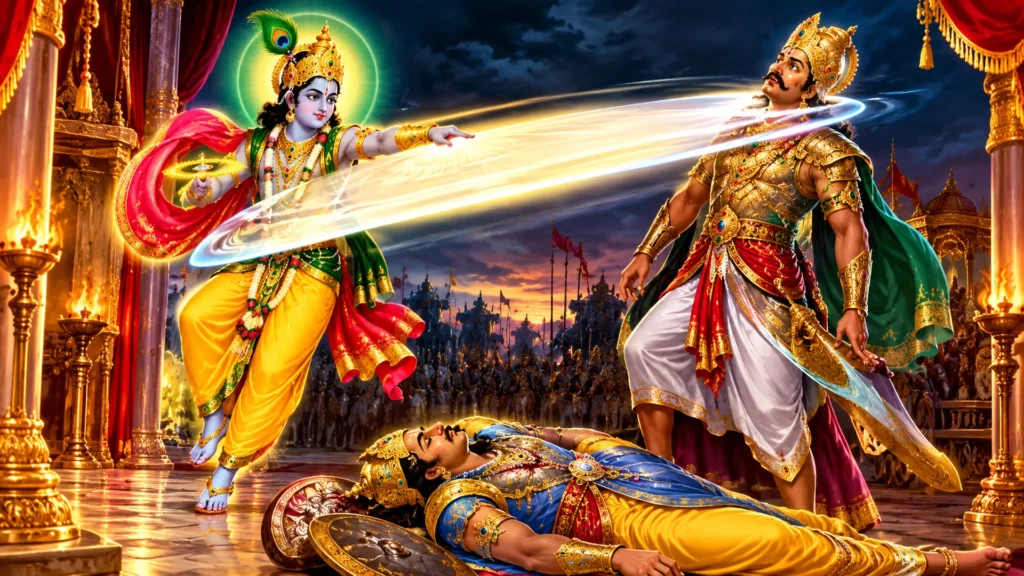
An evergreen devotional guide to the significance, sacred narration, fasting practice and suitable food preparations for Haribhodini Ekadashi.
Pranaams, Namaste, Vanakkum, Hare Krsna, Jai Shree Krsna, Jai Shree Raam All glories to our eternal Parents Shree Shree Radha Krsna All glories to the most merciful Shree Shree Lakshmi Nrsimhadeva All glories to Srila Prabhupada, and the other wonderful and inspiring gurus. All glories to the wonderful servants of the Supreme Lord.
Please refrain from eating grains and meat on this most auspicious day. (N.B I have included what to eat and what not to eat and 16 different meals to have on Ekadashi at the end of this email)
The benefits of fasting on this day are endless. This Ekadashi bestows upon that devotee eradication of the greatest sins that he has committed and is awarded passage to the spiritual abode. One is granted freedom from obstacles in his spiritual progress and grants him the perfection of life. This day of fasting removes all sins eternally. This is the most meritorious day for destroying all kinds of sins.
Please note that this auspicious day is not only for Hindus to observe. This fast can be observed by anyone. There’s no catch here. One who is truly universal does not discriminate; rather he/she respects and embraces all cultures.
One very important point of note. Many perform different prayers like for example nullifying the negative effects of the planets and wonder why the prayer did not work – “What happened, I did the prayer as the priest said and yet I feel the same”. Well what you are not told that is that if you don’t follow the Ekadashi fast and perform the planetary fast then its like bathing and then rubbing mud all over yourself again. So by fasting for a
particular planet on a specific day you are removing the negative effects of that planet but when Ekadashi come and you have grains then the obstacles comes back since by eating grains on Ekadashi you are creating obstacles on your path and life. BUT by observing the Ekadashi fast you are removing all obstacles in your life.
This is the procedure to fast on this day: “The devotee should respectfully worship Lord Govinda with first-class food, flowers, and so forth. In his home he should offer the Lord a lamp in devotional consciousness. He should also avoid sleeping during the daytime and should completely abstain from sex. Fasting from all food and water, he should joyfully sing the Lord’s glories and play musical instruments for His pleasure throughout the night. He should remain awake all night in pure consciousness.” (Of course we are living in Kali Yuga and many would not be able to observe this kind of fast so observe it according to your abilities)
The Katha of Haribodhini Ekadashi
From the Bhavishya-Uttara Purana
“Lord Shree Krishna said to Shree Arjuna, ‘I will tell you why this Ekadashi is the most purifying of all days. In the Satya-Yuga there once lived an amazingly fearsome demon called Mura. Always very angry, he terrified all the devas and with his terrible power he brought them all under his control. “‘Lord Indra then approached Lord Shiva and said, “We have all fallen from our planets and are now wandering helplessly on the earth. O lord, how can we find relief from this affliction?
What will be the fate of us devas?” ‘Lord Shiva replied, “O best of the devas, go to that place where Lord Vishnu, the rider of Garuda, resides. He is Jagannatha, the master of all the universes and their shelter as well. He is devoted to protecting all souls surrendered to Him.” “Lord Krishna continued, ‘O Arjuna, winner of wealth, after Lord Indra heard these words of Lord Shiva’s, he proceeded with all the devas to the place where Lord Jagannatha, the Lord of the universe, the protector of all souls, was resting.
Seeing the Lord sleeping upon the water, the devas joined their palms and, led by Lord Indra, recited many prayers to Lord Jagannatha. “Lord Krsna continued, ‘Having heard Lord Indra and the other devas speak these words, Shree Vishnu replied, “What demon possesses such great powers of delusion that he has been able to defeat all the devas? What is his name, and where does he live? Where does he get his strength and shelter? Tell Me everything, O Indra, and do not fear.” “‘Lord Indra replied, “O Lord of lords, there was once a powerful demon of the Brahma dynasty whose name was Nadijangha.
He was extraordinarily fearsome and wholly dedicated to destroying the devas, and he begot an infamous son named Mura. “Mura’s great capital city is Chandravati. From that base the terribly evil and powerful Mura demon has conquered the whole world and brought all the devas under his control, driving them out of their heavenly kingdom. He has assumed the roles of Lord Indra, the king of heaven; Agni, the fire-god; Yama, the lord of death; Vayu, the wind-god; Isha, or Lord Shiva; Soma, the moon-god; Nairrti, the lord of the directions; and
Varuna, the water-god He has also begun emanating light in the role of the sun god and has turned himself into the clouds as well. It is impossible for the devas to defeat him. O Lord Vishnu, please kill this demon and make the devas victorious.” “‘Hearing these words from Lord Indra, Lord Janardana became very angry and said, “O powerful devas, all together you may now advance on Mura’s capital city of Chandravati.” Encouraged thus, the assembled devas proceeded to Chandravati with Lord Hari leading the way.
“‘When Mura saw the devas, that foremost of demons started roaring very loudly in the company of countless thousands of other demons, who were all holding brilliantly shining weapons. The mighty-armed demons struck the devas, who began abandoning the battlefield and fleeing in the ten directions. Seeing the Supreme Lord Hrsikesha, the master of the senses, present on the battlefield, the furious demons rushed toward Him with various weapons in their hands. As they charged the Lord, who holds a sword, disk, and club, He immediately pierced all their limbs with His sharp, poisonous arrows.
Thus many hundred of demons died by the Lord’s hand. “‘At last the chief demon, Mura, began fighting with the Lord. Mura used his mystic power to render useless whatever weapons the Supreme Lord Hrsikesha unleashed. Indeed, to the demon the weapons felt just like flowers striking him. When the Lord could not defeat the demon even with various kinds of weapons – whether those that are thrown or those that are held – He began fighting with His bare hands, which were as strong as iron-studded clubs. The Lord wrestled with Mura for one thousand celestial years and then, “apparently” fatigued, left for Badarikashrama.
There Lord Yogeshvara, the greatest of all yogis, the Lord of the universe, entered a very beautiful cave named Himavati to rest. O Dhananjaya, winner of wealth, that cave was ninety-six miles in diameter and had only one entrance. I went there to sleep. There is no doubt about this, O son of Pandu, for the great fight made me very tired.
The demon followed Me into that cave and, seeing Me asleep, started thinking within his heart, “Today I will kill this slayer of all demons, Hari.” “‘While the wicked-minded Mura was making plans in this way, from My body there manifested a young girl who had a very bright complexion. O son of Pandu, Mura saw that she was equipped with various brilliant weapons and was ready to fight. Challenged by that female to do battle, Mura prepared himself and then fought with her, but he became very astonished when he saw that she fought him without cessation.
The king of the demons then said, “Who has created this angry, fearsome girl who is fighting me so powerfully, just like a thunderbolt falling upon me?’ After saying this, the demon continued to fight with the girl. “‘Suddenly that effulgent goddess shattered all of Mura’s weapons and in a moment deprived him of his chariot. He ran toward her to attacker with his bare hands, but when she saw him coming she angrily cut off his head. Thus the demon at once fell to the ground and went to the abode of Yamaraja.
The rest of the Lord’s enemies, out of fear and helplessness, entered the subterranean Patala region.
“‘Then the Supreme Lord woke up and saw the dead demon before Him, as well as the maiden bowing down to Him with joined palms. His face expressing His astonishment, the Lord of the Universe said, “Who has killed this vicious demon? He easily defeated all the devas, Gandharvas, and even Indra himself, along with Indra’s companions, the Maruts, and he also defeated the Nagas (snakes), the rulers of the lower planets.
Who is it that has so mercifully protected Me after I went from the battlefield and went to sleep in this cave?” “‘The maiden said, “It is I who have killed this demon after appearing from Your transcendental body. Indeed, O Lord Hari, when he saw You sleeping he wanted to kill You. Understanding the intention of this thorn in the side of the three worlds, I killed the evil rascal and this freed all the devas from fear. I am Your great maha-shakti, Your internal potency, who strikes fear into the hearts of all Your enemies. I have killed this universally terrifying demon to protect the three worlds.
Please tell me why You are surprised to see that this demon has been killed, O Lord.” “‘The Supreme Personality of Godhead said, “O sinless one, I am very satisfied to see that it is you who have killed this king of the demons. In this way you have made the devas happy, prosperous, and full of bliss. Because you have given pleasure to all the devas in the three worlds, I am very pleased with you. Ask any boon you may desire, O auspicious one.
I will give it to you without a doubt, though it be very rare among the devas.” “”The maiden said, “O Lord, if You are pleased with me and wish to give me a boon, then give me the power to deliver from the greatest sins that person who fasts of this day. I wish that half the pious credit obtained by one who fasts will accrue to one who eats only in the evening (abstaining from grains and beans), and that half of this pious credit will be earned by one who eats only at midday.
Also, may one who strictly observes a complete fast on my appearance day, with controlled senses, go to the abode of Lord Vishnu for one billion kalpas after he has enjoyed all kinds of pleasures in this world. This is the boon I desire to attain by Your mercy, my Lord, O Lord Janardana, whether a person observes complete fasting, eats
only in the evening, or eats only at midday, please grant him a religious attitude, wealth, and at last liberation.” “‘The Supreme Personality of Godhead said, “O most auspicious lady, what you have requested is granted. All My devotees in this world will surely fast on your day, and thus they will become famous throughout the three worlds and finally come and stay with me in My abode. Because you, My transcendental potency, have appeared on the eleventh day of the waning moon, let your name be Ekadashi. If a person fasts on Ekadashi, I will burn up all his sins and bestow upon him My transcendental abode.
“‘”These are the days of the waxing and waning moon that are most dear to Me: Tritiya (the third day), Ashtami (the eighth day), Navami (the ninth day), Chaturdashi (the fourteenth day), and especially Ekadashi (the eleventh day).”‘”The merit one attains by fasting on Ekadashi is greater than that achieved by observing any other kind of fast or by going to a place of pilgrimage, and even greater than that achieved by giving charity to brahmanas. I tell you most emphatically that this is true.”
“‘Having thus given the maiden His benediction, the Supreme Lord suddenly disappeared. From that time onward the Ekadashi day became most meritorious and famous all over the universe. O Arjuna, if a person strictly observes Ekadashi; I will grant him the highest destination. Indeed, if a person observes this great Ekadashi fast in any of the prescribed way, I remove all obstacles to his spiritual progress and grant him the perfection of life. “‘Thus, O son of Prtha, I have described to you the origin of Ekadashi. This one-day removes all sins eternally.
Indeed, it is the most meritorious day for destroying all kinds of sins, and it has appeared in order to benefit everyone in the universe by bestowing all varieties of perfection. “‘Whoever completely fasts on Ekadashi, following the rules and regulations, will achieve the supreme abode of Lord Vishnu, who rides upon Garuda. They are glorious who devote themselves to Lord Vishnu and spend all their time studying the glories of Ekadashi. One who vows not to eat anything on Ekadashi but to eat only on the next day achieves the same merit as one who executes a horse sacrifice. Of this there is no doubt.
“‘A devotee of Lord Vishnu who day and night hears these all-auspicious topics concerning the Lord from the mouth of another devotee will be elevated to the Lord’s planet and reside there for ten million kalpas. And one who hears even one sentence about the glories of Ekadashi is freed from the reactions to such sins as killing a brahmana. There is no doubt of this. For all eternity there will be no better way of worshiping Lord Vishnu than observing a fast on Ekadashi.'” Thus ends the narration of the glories of Haribodhini Ekadashi, From the Bhavishya-Uttara Purana.
Sometimes if you cannot fast due to circumstances then you can chant the names of all the Ekadashi and read the above true story and you will receive the same benefits.
Suta Goswami said: There are twelve months in a year, and two Ekadashi’s in each month. Thus there are twenty-four Ekadashi’s in one full year, and in a leap year there are two extra Ekadashi’s. O great sages, please listen attentively as I declare to you the names of these auspicious Ekadashi’s.
The Ekadashis and Their Approximate Western Months
| Ekadashi | Approximate Western Months |
| Utpan-naa | November-December |
| Moksha-daa | November-December |
| Saphalaa | December-January |
| Putra-daa | December-January |
| Shat-tilaa | January-February |
| Jayaa | January-February |
| Vijayaa | February-March |
| Aamalakee | February-March |
| Paapamo-chanee | March-April |
| Kaamadaa | March-April |
| Varoothinee | April-May |
| Mohinee | April-May |
| Aparaa | May-June |
| Nirjalaa | May-June |
| Yoginee | June-July |
| Padmaa | June-July |
| Kaamikaa | July-August |
| Putradaa | July-August |
| Ajaa | August-September |
| Parivartinee | August-September |
| Indiraa | September-October |
| Paapaankushaa | September-October |
| Ramaa | October-November |
| Haribodhinee | October-November |
The two extra Ekadashis, which occur during leap year, are called, Padminee Paramaa
Please note the t is pronounced as follows, place the tip of your tongue on the roof of your mouth and say t.
Please note the n is pronounced as follows, place the tip of your tongue on the roof of your mouth and say n.
“O sages, one who hears about these Ekadashi’s will learn how to observe them properly. Each Ekadashi bestows particular benefits on the faithful observer.
One who is physically unable to fast on Ekadashi may read the glories of each Ekadashi when it occurs and recite all the names of the Ekadashis; thus he will achieve the same goal as the person who observes the full Ekadashi vow.”
Ekadashi Preparations
For a detailed what to eat or not and over 100 Ekadashi recipes please visit our website www.dipika.org.za And look under the sub-menu called EKADASHI – THE DAY OF LORD HARI.
Abstain from: grains (cereals, breads, wheat, flour, beans, rice, dhals, green beans, roti, coffee, etc) meat.
Do not cook with: Powdered hing, shop turmeric (you can use whole turmeric), shop masala and shop chilli powder.
You can cook with the following: Whole turmeric, clean salt, cinnamon sticks, clean oil, butter, ghee, ginger, chilli, curry leaves, maas (yogurt), cheese, cottage cheese, yogurt, clean sugar, rooibos tea, spinach, dhania, thyme, peppers, ground pepper, mint, green bananas, fresh cream, sour cream, bay leaves. Potatoes, tomatoes, peanuts, cabbage, pumpkin, butternut, gem squash, carrots, lettuce, all kinds of fruits, paneer.
1. Make tomato chutney and then add scrambled paneer and dhania. You can also add a little maas (yogurt) or fresh cream to it.
2. Cut eggplant into thin slices and deep fry. Keep aside. Prepare potato mash and keep aside. Now in a casserole dish and lay the eggplant on the bottom and then cover the eggplant with mash, thereafter sprinkle cheese on the mash, then place thin slices of tomato on the cheese. Place strips of peppers on tomato slices. Bake for a few minutes and serve.
3. Potato soup (add salt, thyme and black or white pepper)
4. Mixed vegetable stew example: (cabbage, carrots, peppers, zucchini, and potatoes). Add black pepper, thyme and little butter and fresh cream. Use liquid from the baked vegetables below.
5. Bake the following: Cut potato in large pieces, cut butternut in big pieces, carrots in thin strips, cauliflower into florets, cut sweet potato in rounds. Boil veg. for 15 minutes then drain the vegetables and save the liquid. Mix butter, black pepper, salt, origanum and lots of thyme – rub well into boiled vegetables, bake in oven till crispy on outside.
6. Vaikuntha curry: (use curry leaves and ginger). Cabbage sliced finely, green peppers in strips, carrots in strips; add fried paneer cubes, thyme and dhania.
7. Cut potato into rounds, deep fry and then drain to remove excess oil/ghee/butter. Now place flat in baking tray and grate cheese and bake till cheese melts.
8. Cut potato into rounds and deep fry and then drain excess oil. Place in baking tray (spaces between each) mix scramble curds, tiny cubed tomatoes, green peppers, salt, grated cheese, black pepper, thyme and then place on the potato – add more cheese on top and bake till cheese melts.
9. Bake whole potato with jacket in microwave till soft and make a cross in the top press open, dot butter and add tablespoon of sour cream, top with cheese and bake till cheese melts.
10. Cook cabbage and potato with tomatoes.
11. Cook mixed vegetables. For example, potato, cauliflower and zucchini in butter ghee or oil. When cooked add sour cream or fresh cream. Cook till it thickens.
12. Fry peanuts, fry green bananas
13. Make salads and fruit salads.
14. Chevda: Fry nuts, fry grated potatoes (coloured with red/green/yellow food colour). Also you can fry thin slices of green bananas.
15. Saigo milk: Add 4 cups of water in a pot. Then add one cup of saigo and then bring to boil stirring continuously. Add sugar to taste (approx. 1 cup) and then add a few drops of vanilla essence. Cook on med heat for about 20 minutes until the saigo becomes clear. Add 2 cups of milk, and then boil until slightly thick.
16. Saigo patties. Soak 1 cup of saigo in cold water for 20 minutes and then remove the excess water. Boil three medium size potatoes, and thereafter mash while mash is hot and add saigo. Cut 2 chillies finely, chop up some dhania and add salt to taste. You can add grated cheese. Make into patties, deep fry until golden brown, serve with tomato chutney.
Reference
“Ekadashi: The Day of Lord Hari” 1986. HH Krishna Balaram Swami. Bhaktivedanta Institute Press