
The scientific point of view
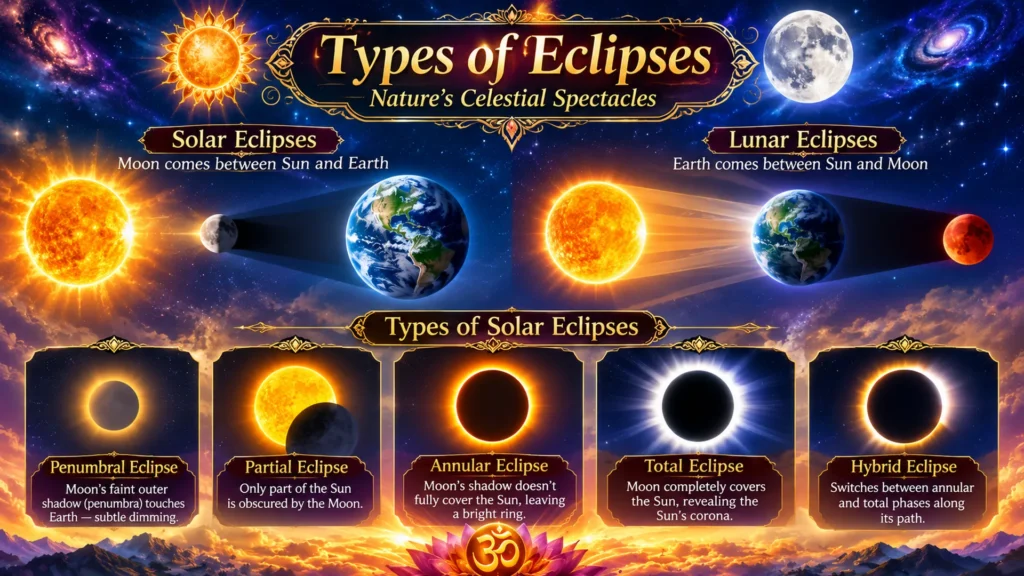
An eclipse occurs when one object gets in between you and another object and blocks your view. From Earth, we routinely experience two kinds of eclipses: an eclipse of the Moon and an eclipse of the Sun.
Eclipses of the Moon
Sometimes, as the Earth orbits the Sun, it comes between the Sun and the Moon. When this happens, the Earth throws a dark shadow across the Moon. This is known as an eclipse of the Moon, or a lunar eclipse.
Eclipses of the Sun
Sometimes, the Moon passes between the Earth and the Sun. The Moon blocks the light of the Sun and a shadow of the Moon is cast on the Earth’s surface. This is an eclipse of the Sun, or a solar eclipse.
There are three types of a solar eclipse: total, partial, and annular. During a total eclipse, the Moon completely covers our view of the Sun. A total eclipse is only visible from a narrow strip (about 150 km wide) of the Earth’s surface at any one time. From the areas outside this narrow strip, the Sun appears to be only partially covered and a partial eclipse is seen. A partial eclipse will also occur if the Sun, Moon, and Earth are not precisely lined up. The eclipse cannot be total unless the center of the Moon’s shadow is able to strike the Earth. The eclipse type that occurs when the Moon is at its farthest distance from the Earth is an annular eclipse. The Moon then appears too small to completely block out the disk of the Sun.
During a solar eclipse, the Moon actually casts two shadows toward Earth. One shadow is called the umbra which becomes smaller as it reaches the Earth. This is the dark center of the Moon’s shadow. The second shadow is called the penumbra. This shadow becomes larger as it reaches the Earth. A total solar eclipse, or a complete blocking out of the Sun’s light, can only be seen by those who live in the area covered by the umbra. People who live in the area of the Earth covered by the penumbra will see a partial eclipse.
A total solar eclipse can only occur when two events happen at the same time. The first event is a new Moon. This phase of the Moon occurs when the Sun is almost directly behind the Moon, and we see only a sliver of the Sun’s light reflected by the Moon. During this time the Moon and the Sun appear close together. The second event that must occur is that the Moon must be in the right position, directly in the line of sight between the Earth and the Sun. These two events occur at the same time about once every year and a half.
2026 Solar Eclipses
17th of February 2026 – Partial Solar Eclipse (Visible in South Africa)
12th of August 2026 — Total Solar Eclipse (NOT visible in South Africa)
2026 Lunar Eclipses
3rd of March 2026 – Total Lunar Eclipse (NOT visible in South Africa)
28th August 2026 – Partial Lunar Eclipse (Visible in South Africa)
An Eclipse Never Comes Alone: A solar eclipse always occurs about two weeks before or after a lunar eclipse. Usually, there are two eclipses in a row, but other times, there are three during the same eclipse season.
Kindly note:
If an Eclipse is not visible in your locality during an Eclipse then nothing is to be observed.
If an Eclipse is visible in your locality during an Eclipse then kindly click on this link for the Do’s and Don’ts:
https://dipika.org.za/wp-content/uploads/2021/11/Eclipses-How-to-observe-an-Eclipse-if-visible-1.pdf
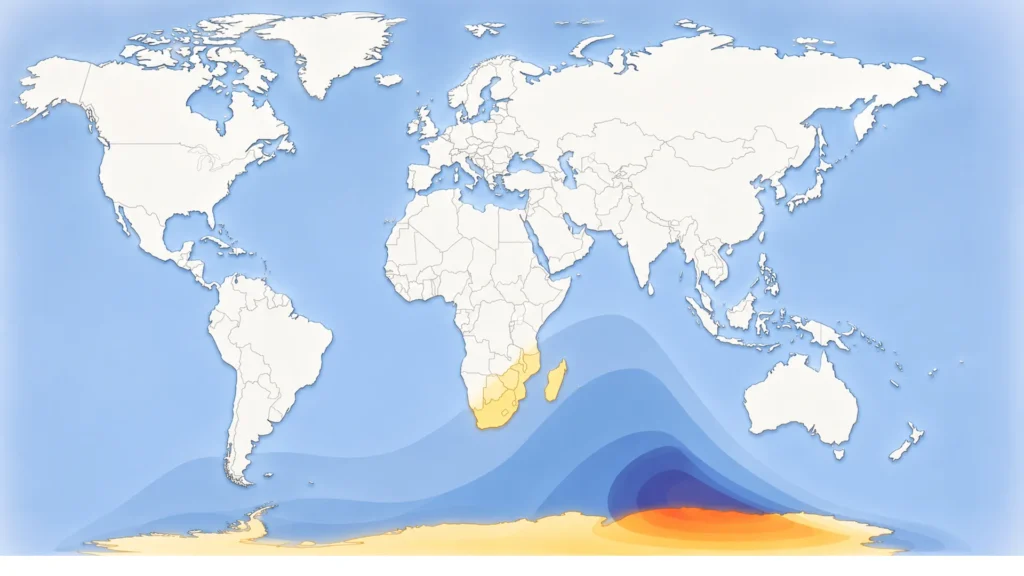
17th of February 2026 – Partial Solar Eclipse (Visible in South Africa)
South Africa – Starts 13h21 and ends 16h03
Regions seeing, at least, a partial eclipse: South in Africa, South in South America, Pacific, Atlantic, Indian Ocean, Antarctica.
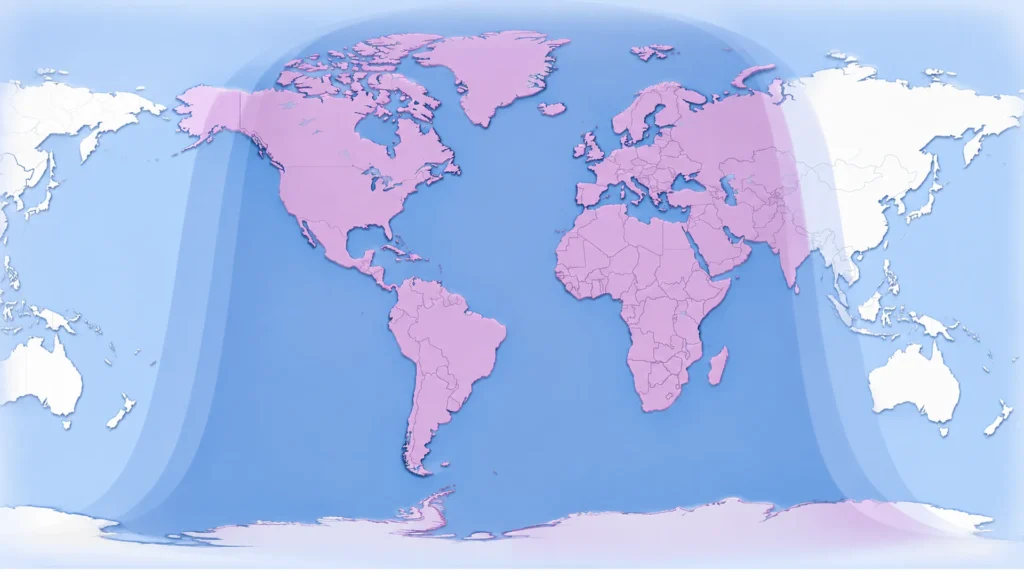
3rd of March 2026 – Lunar Eclipse (NOT visible in South Africa)
Regions seeing, at least, some parts of the eclipse: East in Europe, Asia, Australia, North America, South America, Pacific, Atlantic, Indian Ocean, Arctic, Antarctica.
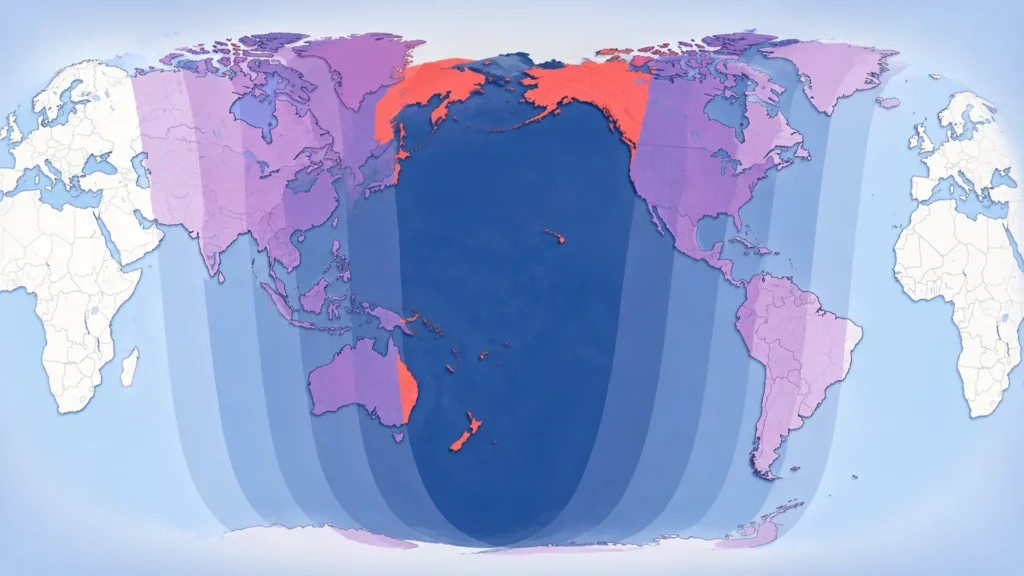
12th of August 2026 — Total Solar Eclipse (NOT visible in South Africa)
Regions seeing, at least, a partial eclipse: Europe, North in Asia, North/West Africa, Much of North America, Pacific, Atlantic, Arctic.

28th of August 2026 – Partial Lunar Eclipse (Visible in South Africa)
South Africa: Starts at 03h23 and ends at 09h01
Regions seeing, at least, some parts of the eclipse: Europe, West in Asia, whole of Africa, North America, South America, Pacific, Atlantic, Indian Ocean, Antarctica.