
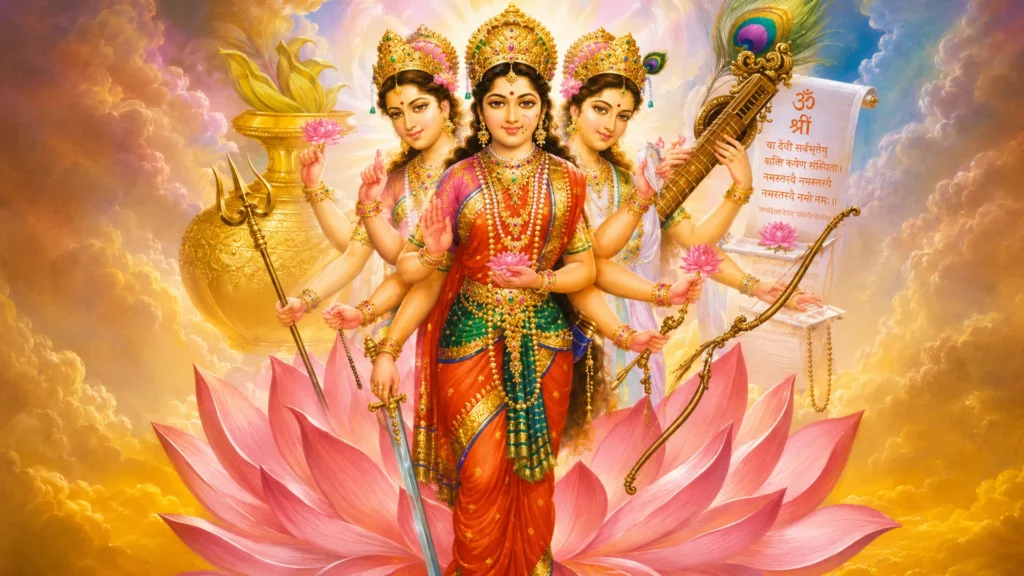
Navaratri is a Hindu festival of worship of Devi Adi Para-Shakti, dance and festivities. The word Navaratri literally means nine nights in Sanskrit, nava meaning nine and ratri meaning nights.
During these nine nights and ten days, nine forms of Shakti/Devi Durga are worshipped. It is commonly referred to as Dussehra in India.
Navaratri is celebrated four times a year according to India’s seasons. They are Poushya/Magha Navaratri, Vasant Navaratri, Ashadha Navaratri and Sharada Maha Navaratri. Of these, Sharada Navaratri and Vasant Navaratri are most important.
Devi Bhagavatam, Book 3, Chapter 27 states: “On observing the Navaratri Vratam, one receives from Devi Durga riches, children, grandchildren, prosperity and happiness, longevity, health, heaven and even final beatitude. Those who are desirous of learning, riches or children will get them all if they perform this most auspicious Navaratra ceremony. On the performance of this sacrifice, those that want knowledge and learning receives all that. Those that have not performed the Navaratra ceremony, how can they acquire riches in this world and acquire happiness and peace in their next? There is no other vow superior to this vow in this world’ this vow is very holy and will bring unto you lots of happiness.”
Devi devotees who abstain from animal sacrifice perform “symbolic BALI” with vegetables or fruits like bananas, cucumber, white pumpkin, nutmeg and sugar cane.
Magha Gupta Navaratri
Magha Gupta Navaratri is the festival of nine days dedicated to the nine forms of Mother Durga or the three main forms of the Mother, namely Mothers Durga, Lakshmi and Saraswati, in the month of Magha (January/February).
During the nine Vedic Navaratri days, devotees may worship Devi in three formats, namely:
First Format
| Days | Dedicated to |
| Days 1-3 | Mother Durga |
| Days 4-6 | Mother Lakshmi |
| Days 7-9 | Mother Saraswati |
Second Format
| Day | Tithi | Devi or observance |
| Day 1 | Pratipada | Mother Shailputri |
| Day 2 | Dwitiya | Mother Brahmacharini |
| Day 3 | Tritiya | Mother Chandraghanta |
| Day 4 | Chaturthi | Mother Kushmanda |
| Day 5 | Panchami | Mother Skandamata |
| Day 6 | Shashti | Mother Katyayani |
| Day 7 | Saptami | Mother Kalaratri |
| Day 8 | Ashtami | Mother Mahagauri |
| Day 9 | Navami | Mother Siddhidatri |
| Day 10 | Dashami | Vijay Dashami |
Third Format
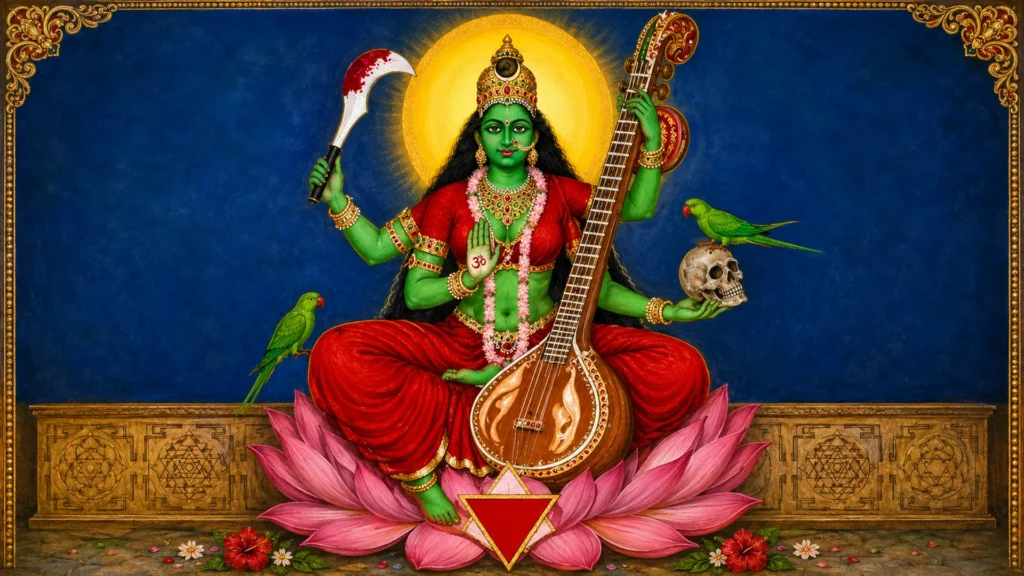
The predominating Devi deity for Magha (Gupta) Navaratri is the Tantrik form of Mother Saraswati called Maatangi Devi.
Who Is Maatangi Devi
Devi Maatangi (Sanskrit: मातङ्गी, Maataṅgee) is one of the Das Mahavidyas, ten Tantric goddesses and an aspect of the Vedic Divine Mother. Devi Maatangi is named as the ninth Mahavidya Devi.
She is the Tantric form of Mother Saraswati, the Goddess of music and learning. Maatangi Devi governs speech, music, knowledge and the arts.
Her worship is prescribed to acquire supernatural powers, especially gaining control over enemies, attracting people to oneself, acquiring mastery over the arts and gaining supreme knowledge.
Vasant Chaitra Navaratri
Vasant/Chaitra Navaratri is the festival of nine days dedicated to the nine forms of Mother Durga or the three main forms of the Mother, namely Mothers Durga, Lakshmi and Saraswati, in the spring (Vasant) season (March-April).
During the nine Vedic Navaratri days, devotees may worship Devi in three formats, namely:
First Format
| Days | Dedicated to |
| Days 1-3 | Mother Durga |
| Days 4-6 | Mother Lakshmi |
| Days 7-9 | Mother Saraswati |
Second Format
| Day | Tithi | Devi or observance |
| Day 1 | Pratipada | Mother Shailputri |
| Day 2 | Dwitiya | Mother Brahmacharini |
| Day 3 | Tritiya | Mother Chandraghanta |
| Day 4 | Chaturthi | Mother Kushmanda |
| Day 5 | Panchami | Mother Skandamata |
| Day 6 | Shashti | Mother Katyayani |
| Day 7 | Saptami | Mother Kalaratri |
| Day 8 | Ashtami | Mother Mahagauri |
| Day 9 | Navami | Mother Siddhidatri |
| Day 10 | Dashami | Vijay Dashami |
Third Format
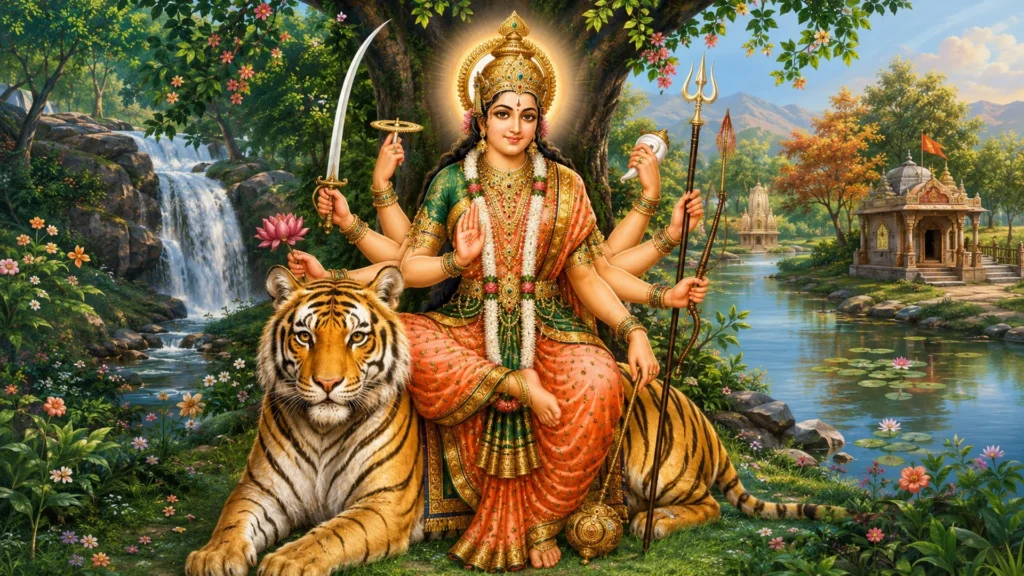
The predominating Devi deity for Vasant/Chaitra Navaratri is Mother Bandi.
Who Is Bandi Devi
Bandi Devi (also known as Vindhyeshvari Devi) is a manifestation of the Supreme Mother Goddess Shakti.
Scriptural proof regarding her can be found in the Kashi Khand of the Skanda Purana and the Rig Veda VIII 101-13: “She, Bandi devi yonder, bending down, rich in rays, clothed in red hues is seen, advancing as one wonderful form, amid the ten surrounding arms”.
It must be noted that in prayers, Mother Bandi is equated with Durga Devi. Bandi Devi interchanges riding a tiger and a lion, with depictions of her riding a tiger being the more popular choice.
The Bandi Paath is a well-known prayer dedicated to this Goddess. Bandi Devi is the bestower of children and rescues one from hardships. She blesses one with well-being and provides support when difficulty arises.
Traders or shopkeepers should recite this katha with faith and concentration. People heavily in debt should also recite the Bandi Paath often. It is said that whatever a person asks for, they shall receive when they pray to Mother Bandi – no matter if it is milk, a child, riches or Lakshmi (abundance).
Ashadha Gupta Navaratri
Ashadha/Gupta Navaratri is the festival of nine Vedic days dedicated to the nine forms of Mother Durga or the three main forms of the Mother, namely Mothers Durga, Lakshmi and Saraswati, in the month of Ashadha (June-July).
During the nine Vedic Navaratri days, devotees may worship Devi in three formats, namely:
First Format
| Days | Dedicated to |
| Days 1-3 | Mother Durga |
| Days 4-6 | Mother Lakshmi |
| Days 7-9 | Mother Saraswati |
Second Format
| Day | Tithi | Devi or observance |
| Day 1 | Pratipada | Mother Shailputri |
| Day 2 | Dwitiya | Mother Brahmacharini |
| Day 3 | Tritiya | Mother Chandraghanta |
| Day 4 | Chaturthi | Mother Kushmanda |
| Day 5 | Panchami | Mother Skandamata |
| Day 6 | Shashti | Mother Katyayani |
| Day 7 | Saptami | Mother Kalaratri |
| Day 8 | Ashtami | Mother Mahagauri |
| Day 9 | Navami | Mother Siddhidatri |
| Day 10 | Dashami | Vijay Dashami |
Kindly note that Hindu Vedic days differ hugely from Western Gregorian days. A Gregorian day commences at midnight and ends the following midnight, whilst a Vedic day (Tithi) can begin at varying times of a Gregorian day and vary in duration from approximately 19 to approximately 26 hours. Hence, one may often find that there are two Vedic days (Tithis) in one Gregorian day or two Gregorian days in one Vedic day (Tithi), as stated above.
Third Format
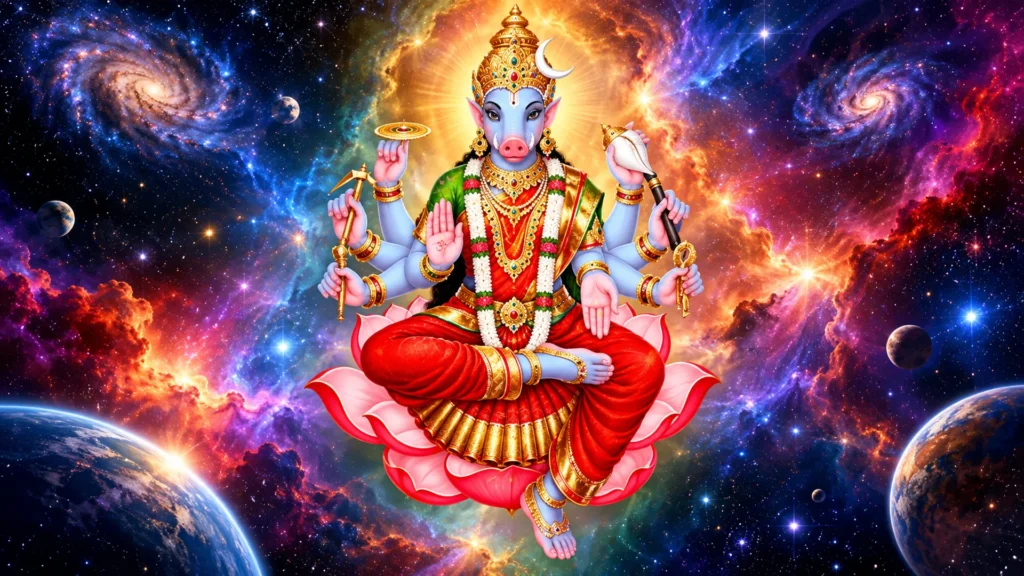
The predominating Devi deity for Ashadha/Gupta Navaratri is the Tantrik form of Mother Earth (Bhumi) called Varahi Devi.
Who Is Varahi Devi
Varahi (Sanskrit: वाराही, Vaaraahee) is a member of one of the Sapta-Matrikas group (‘seven mothers’) in Vedic scriptures. Since she is the fifth of the Matrikas, she is also known as ‘Panchami’.
Bearing the head of a sow, Varahi is the Shakti (feminine energy) and one of the consorts of Varaha, the boar avatar of Lord Vishnu.
Maha Sharad Navaratri
Sharad Navaratri is the most important of the Navaratris. It is simply called Maha Navaratri (the Great Navaratri) and is celebrated in the month of Ashwina.
It is celebrated during Sharad (beginning of winter in India, September-October) and is the festival of nine Vedic days dedicated to the nine forms of Mother Durga or the three main forms of the Mother, namely Mothers Durga, Lakshmi and Saraswati.
During the nine Vedic Navaratri days, devotees may worship Devi in three formats, namely:
First Format
| Days | Dedicated to |
| Days 1-3 | Mother Durga |
| Days 4-6 | Mother Lakshmi |
| Days 7-9 | Mother Saraswati |
Second Format
| Day | Tithi | Devi or observance |
| Day 1 | Pratipada | Mother Shailputri |
| Day 2 | Dwitiya | Mother Brahmacharini |
| Day 3 | Tritiya | Mother Chandraghanta |
| Day 4 | Chaturthi | Mother Kushmanda |
| Day 5 | Panchami | Mother Skandamata |
| Day 6 | Shashti | Mother Katyayani |
| Day 7 | Saptami | Mother Kalaratri |
| Day 8 | Ashtami | Mother Mahagauri |
| Day 9 | Navami | Mother Siddhidatri |
| Day 10 | Dashami | Vijay Dashami |
Third Format
Durga Visarjan is observed after Vijay Dashami.
The predominating Devi deity for Maha/Sharad Navaratri is Adi Para Shakti Herself as Durga Devi.
Who Is Durga Devi
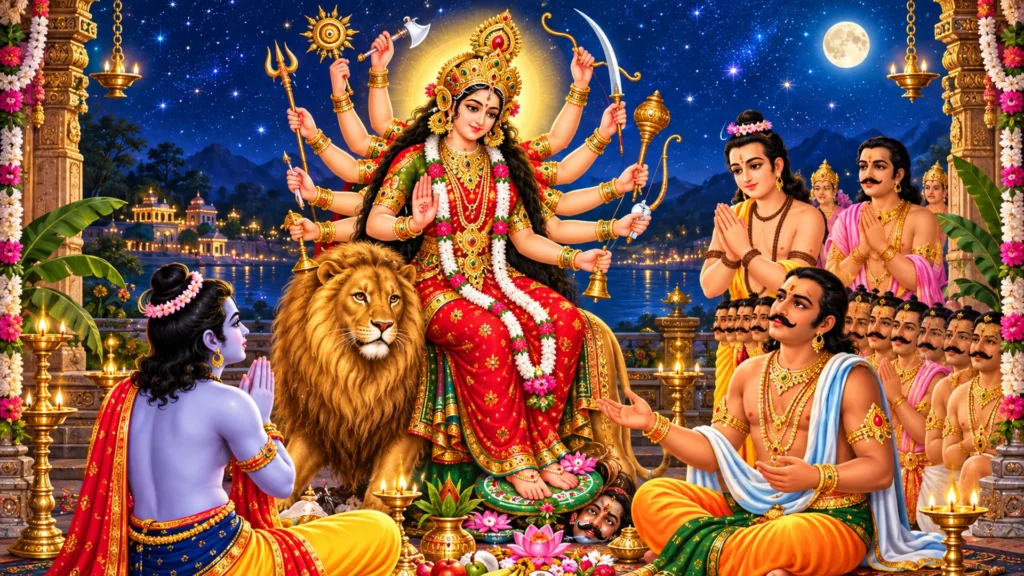
Durga (Sanskrit: दुर्गा, Durga) is a major deity and supreme divinity in the Vedic scriptures. Durga Devi is worshipped as one of the principal aspects of the supreme divinity Mahadevi and is also one of the most popular and widely revered among Vedic divinities.
Durga Devi is associated with protection, strength, motherhood, destruction and wars. Durga Devi’s fame centres around combating evils and demonic forces that threaten peace, prosperity and Dharma, the power of good over evil.
Durga Devi unleashes her divine wrath against the wicked for the liberation of the oppressed, and includes destruction to empower creation.
Durga Devi is seen as a motherly figure and is often depicted as a beautiful woman, riding a lion or tiger, with many arms, each carrying a weapon, and often defeating demons.
She is widely worshipped by the followers of the Goddess-centric sect, Shaktism, and has importance in other denominations like Shaivism (devotees of Lord Shiva) and Vaishnavism (devotees of Lord Vishnu).
The two most important scriptural texts of Shaktism, Devi Mahatmya and Devi-Bhagavat, revere Devi or Shakti (Goddess) as the primordial creator of the universe and the Brahman (ultimate truth and reality). While all major texts of Hinduism (Sanatan Dharma) mention and revere the Goddess, these two texts centre around her as the primary divinity.
The word Durga (दुर्गा) literally means ‘impassable’, ‘invincible, unassailable’. It is related to the word Durg (दुर्ग), which means ‘fortress, something difficult to defeat or pass’. According to the Monier-Williams Sanskrit dictionary, Durga is derived from the roots “dur” (difficult) and “gam” (pass, go through).
Dipika has the 14-page article named “The predominating Devi Deity for each Navaratri of the year”. It comes with the full prayer procedure of the above Devis. The link to this article is below: