

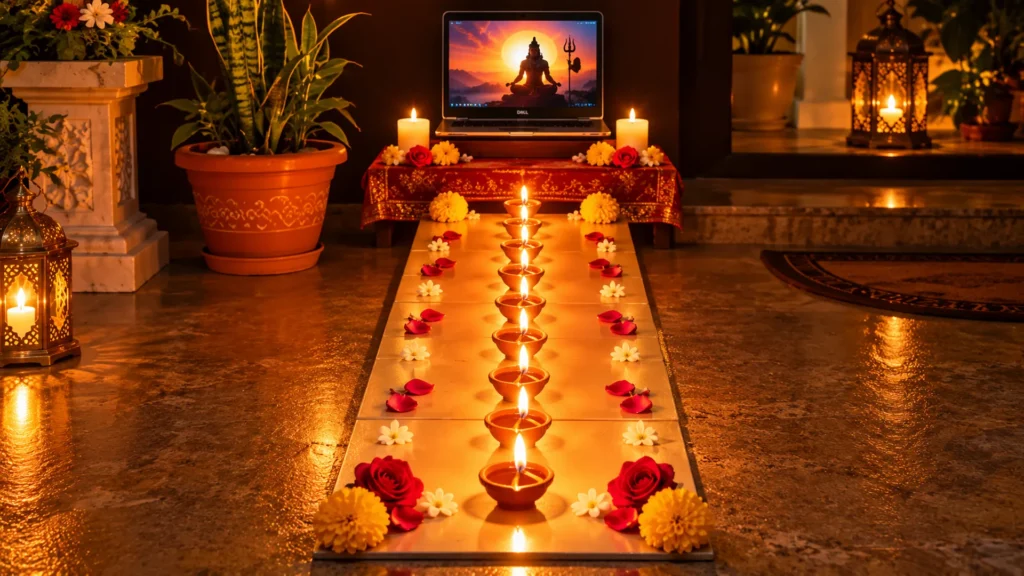
Many devotees perform this special ritual one day before Diwali. However, the Vedic Panchang is complex, and in some years it is observed two days before Diwali.
Yama Deepa Daan, also known as Yama Deepam or Yamadeepdaan, is performed during the evening Pradosh Kaala on Dhanteras. It honours Lord Yamaraja, the Vedic deity of justice and death, and seeks protection for family members against untoward incidents, chronic illness and untimely death (Apalmrityu).
How to Perform the Yama Deepa Daan Ritual
There are two procedures for offering the Yama Deepa lamps.
Option One Four Wick Yama Deepam
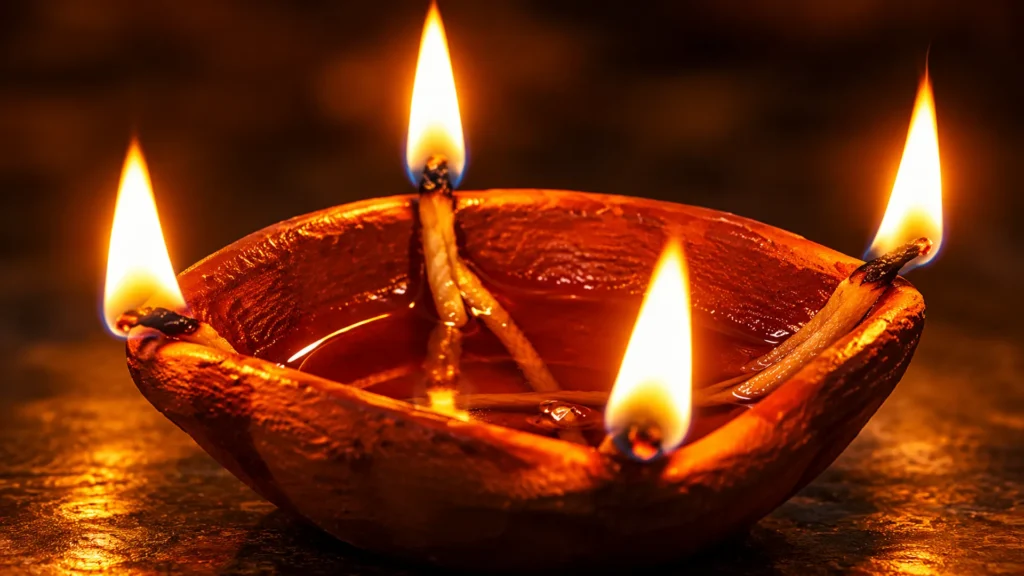
This ritual takes place on Dhanteras (Dhantrayodashi) during the evening Pradosh Kaala, immediately after sunset. Devotees light a four-wick lamp, often made from wheat-flour dough and filled with gingelly or sesame oil, and place it outside the entrance of the home facing south. The prayer seeks protection for family members against premature death and ill health.
Items Needed
- Wheat-flour dough or a medium-sized clay diya
- Sesame oil (gingelly oil) or mustard oil
- Four cotton wicks (Chaumukhi)
- One small copper or silver coin, or standard currency
- Raw rice grains or wheat grains for the base
- Flowers, kumkum and haldi for worship
- A small plate or thari, or a wooden platform (chawki)
1. Prepare the Diya: Inside the home during Pradosh Kaala after sunset, knead wheat flour with a little water to form a firm dough. Shape it into a four-cornered lamp (Chaumukhi Diya). Place four long cotton wicks so that their tips face the four cardinal directions: north, south, east and west. Fill the lamp generously with sesame oil or mustard oil.
2. Offer the Initial Puja: Keep the lamp on a small plate inside before moving it outside. Make a small heap of raw rice or wheat grains on the plate and place the diya on top. Drop a small coin inside the lamp. Apply kumkum and haldi to the lamp, offer flower petals, and light all four wicks.
3. Place the Lamp Outside Facing South: Carry the lit lamp outside the main entrance and place it on the right-hand side as you exit. Ensure that its main facing direction is towards the south (Dakshin), the direction governed by Lord Yama.
4. Recite the Yama Mantra and Offer Prayers: Stand facing south, fold your hands and offer prayers to Lord Yama using the traditional mantra. If the Sanskrit mantra is too difficult, repeat its English meaning.
5. Return Inside Without Looking Back: After offering flowers and water around the base of the lamp, turn around and walk back into the house without looking back at the lit lamp. Wash your hands and feet before rejoining the family inside.
Yama Deep Daan Mantra
मृत्युना पाशदण्डाभ्यां कालेन श्यामाया सह
त्रयोदश्यां दीपदानात् सूर्य जः प्रीयतां मम
Transliteration
Mrityunaa Paashadandaabhyaam Kaalena Shyaamaayaa Saha
Trayodashyaam Deepadaanaat Sooryajah Preeyataam Mama
Meaning
On this thirteenth lunar day (Trayodashi), by offering this lamp, may the son of Surya, Lord Yama, accompanied by his noose, staff, time and dark form, be pleased with me and protect my family from untimely death.
Option Two Thirteen Lamps
For Yamadeepadaan, thirteen lamps are kept burning through the night in reverential adoration of Lord Yamaraja, the Lord of Death. Prayers are offered to him to keep away death and despair.
This observance is connected with the katha of the sixteen-year-old son of King Hima. Thirteen lamps made of wheat flour, or thirteen clay lamps filled with oil, are placed outside the home in the evening facing south, towards Lord Yamaraja’s abode. A lamp is never kept facing south except on this day.
Recite the following prayer in English and offer obeisances: “I offer these thirteen lamps to the son, Lord Yama, of the Sun deity, Surya, so that He liberates me from the clutches of death and bestows His blessings upon me.”
The Katha Behind Yama Deepa Daan
The tradition of Yama Deepa Daan originates from ancient Puranic kathas. It is primarily rooted in the katha of King Hima and his sixteen-year-old son, alongside a secondary discourse involving Lord Yama and his messengers, the Yamadutas.
The most popular katha associated with Yama Deepa Daan centres on the young son of King Hima.
1. The Prophecy: According to his natal horoscope (Janma kundali), King Hima’s son was destined to die from a snake bite on the fourth day of his marriage.
2. The Clever Plan: When the fateful fourth day arrived, coinciding with Dhanteras or Kartik Krishna Trayodashi, his newly wedded wife refused to let him sleep. She placed her gold and silver ornaments and gemstone jewellery in a heap at the entrance of their sleeping chamber, and lit diyas around the room and entrance.
3. The Distraction: She kept her husband awake by telling captivating Puranic kathas and singing devotional songs. When Lord Yamaraja arrived in the guise of a serpent to take the prince’s life, the brilliant glare from the jewellery and the bright lamps blinded the serpent.
4. The Salvation: Unable to enter the bedroom or strike the prince, the serpent slithered onto the heap of gold and remained there all night listening to the music and kathas. When morning arrived, the auspicious time for the prince’s death had passed, and Lord Yamaraja quietly departed without taking his life.
Because the intelligent bride saved her husband from untimely death through the strategic placement of light and wealth on this day, the evening became celebrated as Yama Deepam.
The Yamadutas Plea to Lord Yamaraja
A secondary katha from the Skanda Purana describes a conversation between Lord Yama and his messengers, the Yamadutas.
The Yamadutas asked Lord Yamaraja whether mortal human beings could escape premature or accidental death (Apalmrityu), because carrying out these tasks filled even the messengers with grief.
Lord Yamaraja replied that although death is inevitable for all living beings, those who offer a four-wick lamp filled with sesame oil outside their home, facing south on the evening of Dhanteras, would be granted protection. Lord Yamaraja promised that his messengers would not inflict untimely death upon anyone in that household.
Core Symbolism
- South Direction: In Vedic cosmology and astrology, south (Dakshina) is the cardinal direction governed by Lord Yama.
- The Four Wicks (Chaumukhi): The four wicks represent the four directions of life and total protection over the household.
- Sesame (Til) Oil and Coin: These are offered as a symbolic tribute (daan) to appease the Lord of Justice and burn away negative karmic debts associated with sudden accidents or ailments.